
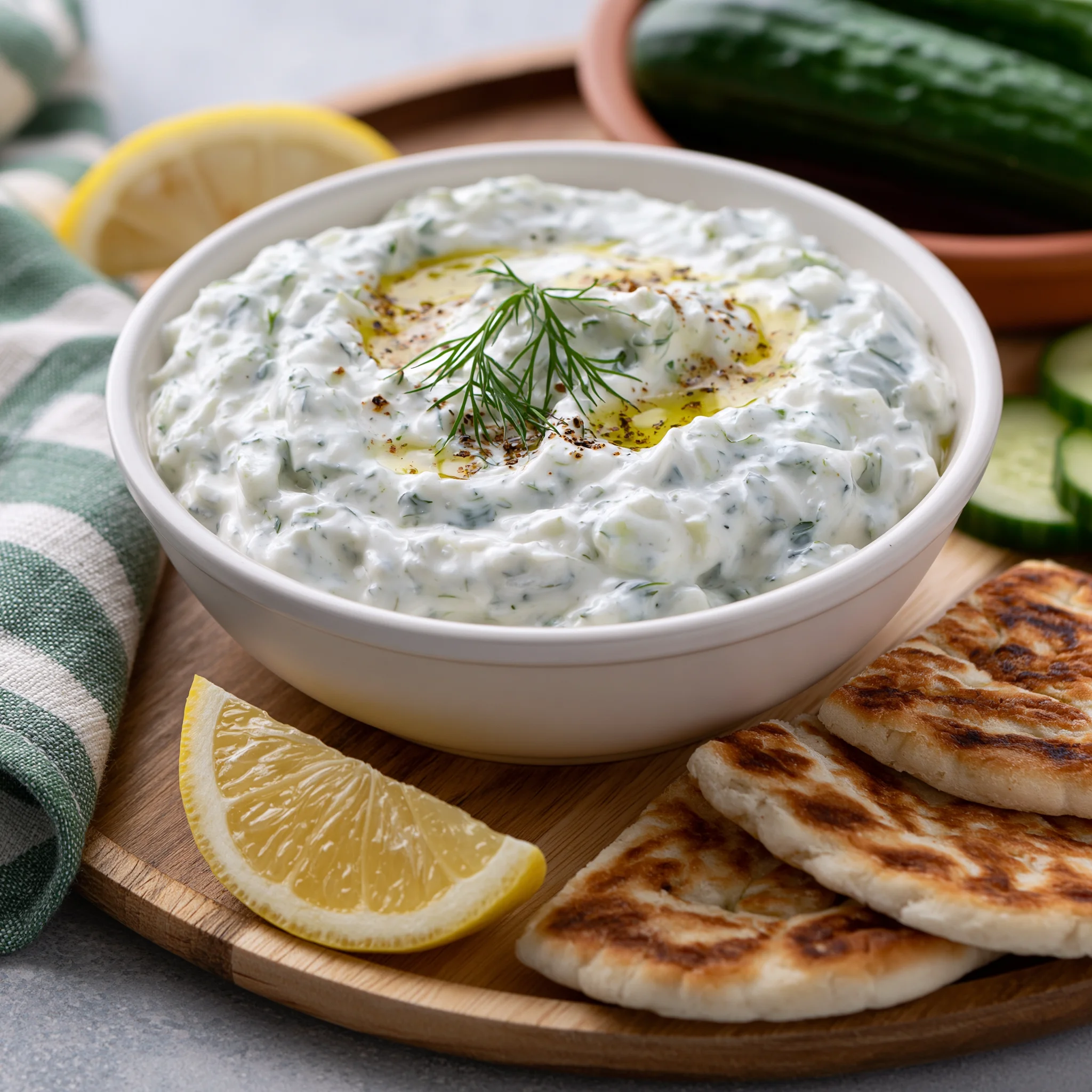
Tzatziki sauce is not just a condiment; it is a culinary statement of freshness, balance, and Mediterranean precision. Every spoonful delivers a cooling contrast that transforms even the simplest meal into something refined and memorable.
What makes tzatziki exceptional is its purity. The combination of thick yogurt, crisp cucumber, and aromatic herbs creates a sauce that feels both light and luxurious. It is a classic example of how simple ingredients can deliver restaurant-level depth when handled correctly.
In professional kitchens, tzatziki is valued for its versatility. It pairs effortlessly with grilled meats, wraps, roasted vegetables, and even as a dip. Its refreshing profile cuts through rich dishes, creating harmony on the plate.
This recipe focuses on achieving perfect texture and balance, never watery, never overpowering. It is crafted for those who appreciate clean flavors and want a sauce that elevates every dish it touches with effortless elegance.
Table of Contents
Ingredients You’ll Need
Base Ingredients:
- Greek yogurt: 2 cups (thick and strained)
- Cucumber: 1 large (finely grated and drained)
- Garlic cloves: 2 (minced)
- Olive oil: 2 tbsp
- Lemon juice: 1 tbsp
- Fresh dill: 2 tbsp (chopped)
- Salt: ½ tsp
- Black pepper: ¼ tsp
Optional Add-ins:
- Mint leaves: 1 tbsp (finely chopped)
- White vinegar: 1 tsp
- Zest of lemon: ½ tsp
- Crushed walnuts: 1 tbsp
Step-by-Step Intrusions
Cucumber Preparation and Base Formation
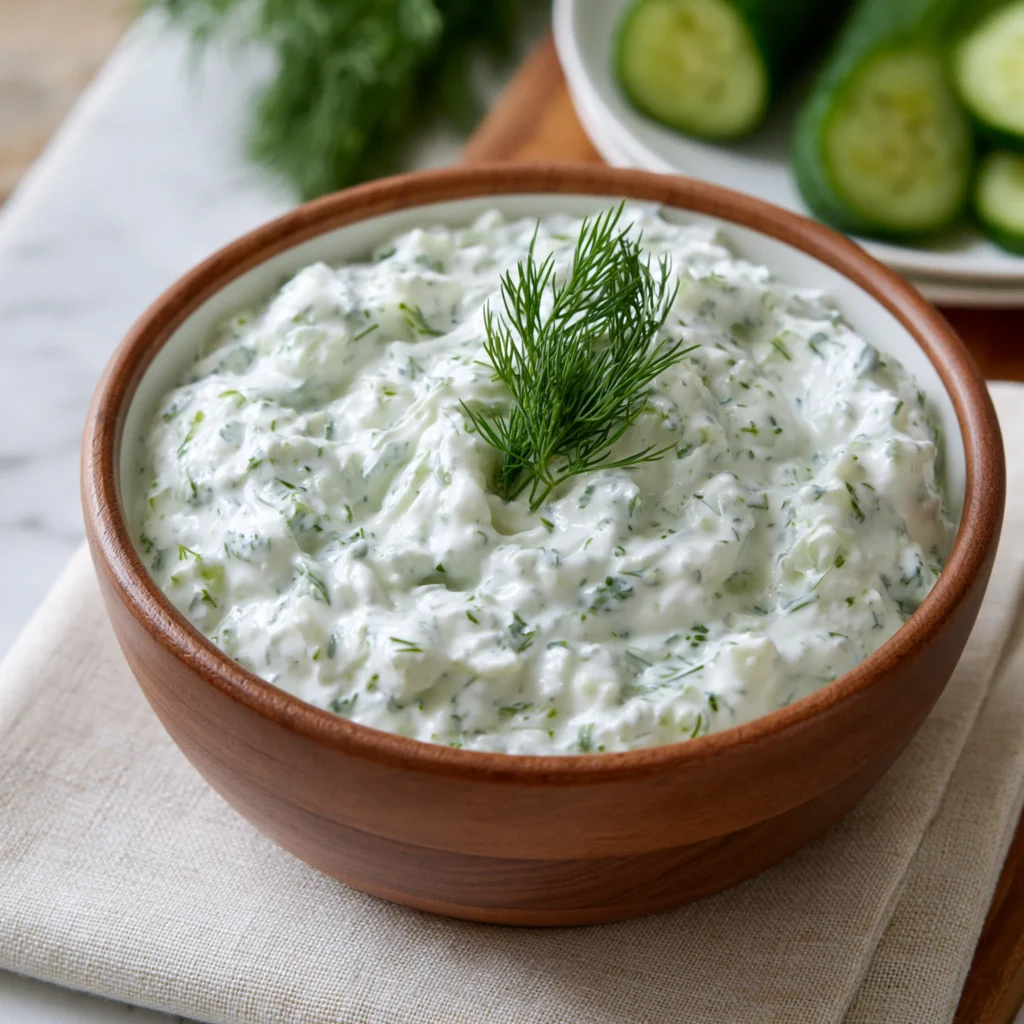
Start by grating the cucumber finely, ensuring it releases excess moisture. Squeeze it firmly using a clean cloth to remove water completely. This step is crucial because excess liquid can dilute the sauce and ruin its signature thick texture.
Once dried, combine cucumber with Greek yogurt in a chilled mixing bowl. Add salt at this stage to enhance flavor absorption. The base should appear thick, creamy, and stable. Proper moisture control ensures the sauce maintains its professional consistency and does not separate during resting.
Flavor Building and Aromatic Balance
Add minced garlic, olive oil, lemon juice, and chopped dill into the yogurt mixture. Stir gently but thoroughly to distribute flavors evenly. Each ingredient plays a key role in building depth without overpowering the natural freshness of the sauce.
Mix until the texture becomes smooth and uniform. Avoid overmixing, as it can break the yogurt structure. The goal is a balanced aroma where garlic and herbs enhance but do not dominate the refreshing base profile of the tzatziki.
Resting and Flavor Fusion
Cover the mixture and refrigerate for at least one hour. This resting period allows the flavors to blend and mature, creating a more refined and cohesive taste. Freshness intensifies as ingredients settle together naturally.
Before serving, give a light stir and adjust seasoning if needed. The final texture should be thick, creamy, and spoonable. Proper resting ensures a professional-quality tzatziki with balanced acidity and herbal freshness.
Cook Time
Total: 1 hour (including resting time)
Prep: 15 minutes
Bake: No baking required
Servings
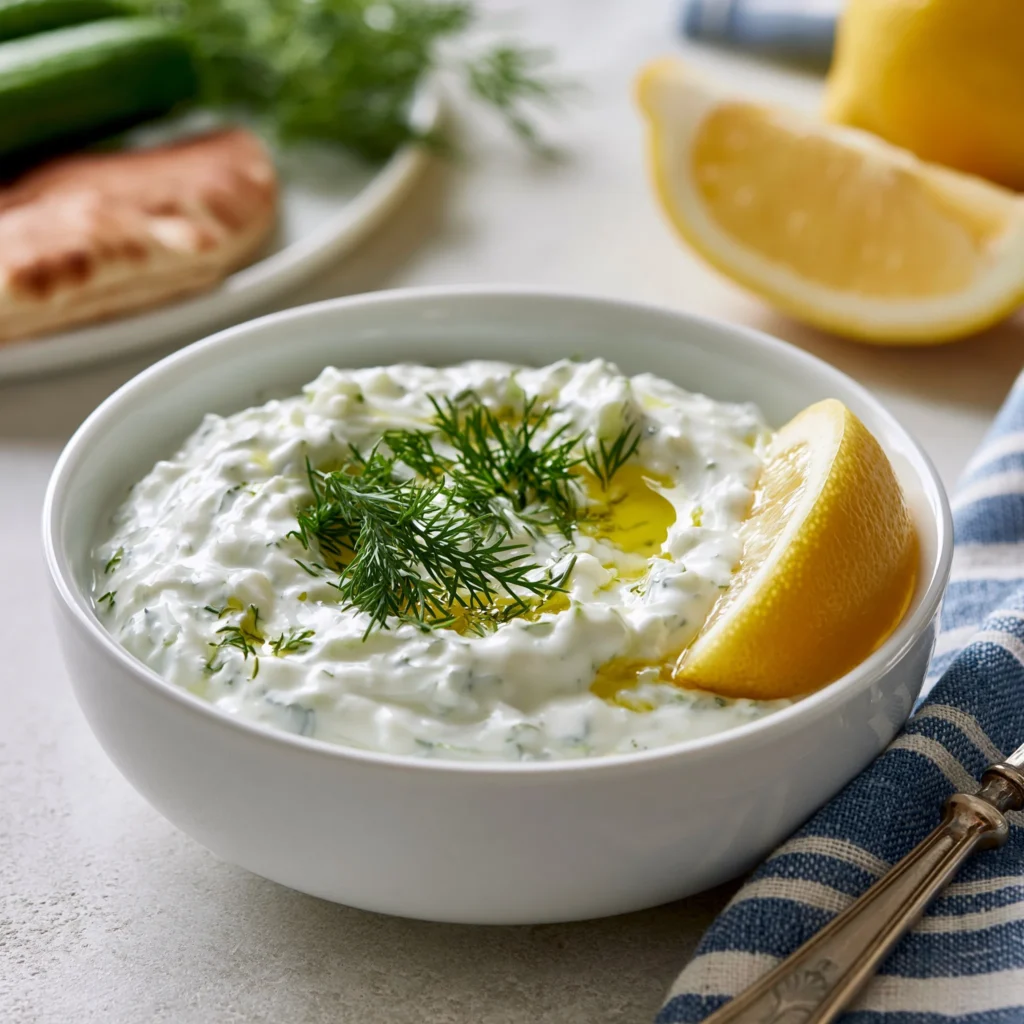
Tzatziki sauce is typically served in small, flavorful portions designed to complement main dishes rather than dominate them. Each serving delivers a refreshing balance of creaminess and herbal brightness that enhances overall meal experience.
It is commonly used as a dip, spread, or sauce, making it highly versatile in both casual and gourmet dining. A small portion is enough to elevate wraps, grilled meats, or roasted vegetables effectively.
This recipe yields approximately 6 to 8 servings depending on usage. Its rich yet light profile ensures that even small amounts provide strong flavor impact without overwhelming the dish it accompanies.
Common Mistake in Tzatziki Sauce Preparation
One of the most frequent mistakes is failing to properly drain the cucumber. Excess moisture causes the sauce to become watery, weakening its texture and diluting the rich yogurt base. This ruins the signature thickness that defines authentic tzatziki.
Another common error is using regular yogurt instead of strained Greek yogurt. Thin yogurt results in a runny consistency that cannot hold the ingredients together properly, affecting both presentation and mouthfeel significantly.
Overpowering garlic is also a typical issue. While garlic is essential, using too much creates a harsh flavor that dominates the delicate balance of herbs and yogurt, making the sauce less refreshing and more pungent than intended.
Improper mixing technique can also lead to separation. Over-stirring breaks the creamy structure, while under-mixing leaves uneven flavor distribution. Both affect the smooth, cohesive texture expected in a well-prepared tzatziki sauce.
Solution to Common Mistake in This Recipe
To prevent watery texture, always squeeze grated cucumber thoroughly using a cloth or fine sieve. Removing excess moisture ensures the sauce remains thick, creamy, and stable even after refrigeration or serving time.
Use only thick Greek yogurt for authentic consistency. If unavailable, strain regular yogurt for several hours. This step ensures a dense base that supports all ingredients without becoming runny or unstable.
Control garlic intensity by using small amounts and adjusting gradually. Start with minimal quantity and increase only if needed. This preserves balance while maintaining the fresh, clean flavor profile of the sauce.
Mix gently using folding motions instead of aggressive stirring. This preserves texture integrity and ensures even distribution of ingredients, resulting in a smooth, professional-quality tzatziki every time.
Nutritional Information (approx. per serving)
- Calories: 90 kcal
- Fat: 6g
- Protein: 5g
- Carbohydrates: 4g
- Fiber: 0.5g
- Sodium: 180mg
This sauce supports a healthy lifestyle due to its probiotic-rich yogurt base, which promotes gut health and digestion. Fresh cucumber adds hydration and lightness, making it ideal for balanced meals.
The olive oil contributes healthy fats that support heart health while enhancing flavor absorption. Together, these ingredients create a nutrient-dense condiment that complements both weight-conscious and fitness-focused diets effectively.
Garlic and herbs provide antioxidant properties that help support immunity and overall wellness. This makes tzatziki not only flavorful but also a functional addition to everyday meals.
Low in calories yet rich in taste, tzatziki is an excellent alternative to heavy sauces. It enhances meals without adding unnecessary fat or processed ingredients, making it a clean-eating essential.
Storage Instructions
Tzatziki should always be stored in an airtight container to maintain freshness and prevent odor absorption from other foods in the refrigerator. Proper sealing is essential for preserving flavor integrity.
It remains fresh for up to 3 days when refrigerated correctly. After this period, cucumber may release additional moisture, slightly altering the texture and reducing overall quality.
Before serving, always stir the sauce gently to restore its creamy consistency. Separation is natural during storage but can be easily corrected with light mixing.
Avoid freezing tzatziki as it disrupts the yogurt structure. Freezing leads to grainy texture and water separation, which negatively affects its smooth, fresh profile.
Suggestions
For a richer flavor, allow tzatziki to rest overnight. This enhances ingredient fusion and deepens the herbal and garlic notes without overwhelming freshness.
Pair it with grilled meats like chicken or lamb for a classic Mediterranean experience. It also works beautifully as a dip for warm pita bread or fresh vegetables.
For a modern twist, add a small amount of mint to increase cooling sensation. This elevates freshness and provides a slightly sweeter aromatic profile.
Serving chilled is essential for maximum impact. Always keep it refrigerated until the moment of serving to preserve its crisp, refreshing character.
Seasonal Relevance
Tzatziki is especially popular in summer due to its cooling and hydrating properties. It complements hot-weather meals by providing refreshing contrast to grilled and spicy dishes.
During warmer months, cucumbers are at peak freshness, enhancing the natural flavor and texture of the sauce. This makes it ideal for seasonal cooking.
In spring and early summer, it pairs well with lighter meals such as salads and wraps. Its fresh profile aligns perfectly with seasonal eating habits.
Even in colder months, tzatziki remains relevant as a bright contrast to heavy comfort foods, adding balance and freshness to rich winter meals.
Final Words
Tzatziki sauce represents the elegance of simplicity in Mediterranean cuisine. It proves that a few well-chosen ingredients can create something truly refined and memorable.
Its versatility makes it a kitchen essential, capable of transforming everyday meals into something vibrant and refreshing with minimal effort and maximum impact.
When prepared correctly, it delivers perfect harmony between creaminess, freshness, and aromatic depth, making it a timeless culinary staple.
This recipe is not just about taste, it is about mastering balance, technique, and respect for ingredients that define authentic Mediterranean cooking.
Frequently Asked Questions
Can tzatziki be made without garlic for a milder taste?
Yes, tzatziki can be prepared without garlic for a softer flavor profile. Omitting garlic makes it more suitable for sensitive palates while still maintaining freshness from cucumber, yogurt, and herbs. You can also replace it with mild herbs for added aroma without intensity.
What type of cucumber works best for tzatziki sauce?
English cucumbers are ideal due to their low seed content and mild flavor. They also release less water, helping maintain a thick consistency. Regular cucumbers can be used, but they must be properly peeled and drained to avoid excess moisture in the sauce.
Can tzatziki be used as a salad dressing?
Yes, tzatziki works well as a creamy salad dressing when slightly thinned with lemon juice or olive oil. It adds freshness and tanginess to salads while keeping them light and nutritious. Adjust consistency based on preference for drizzling or dipping use.
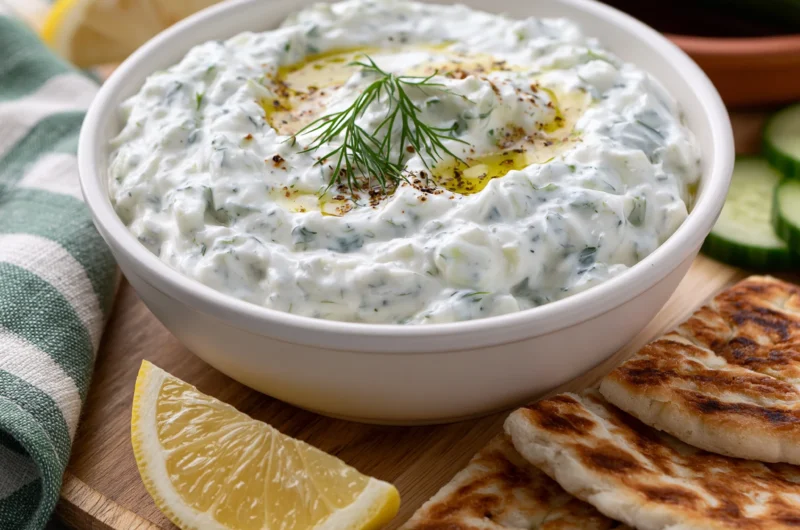
Tzatziki Sauce Recipe So Refreshing
6
servings15
minutes1
hour90
kcalTzatziki sauce is a refreshing Mediterranean dip made with thick Greek yogurt, cucumber, garlic, and herbs. This creamy, cooling sauce is perfect for grilled meats, wraps, salads, and snacks, offering a light yet flavorful balance in every bite.
Ingredients
Greek yogurt: 2 cups (thick and strained)
Cucumber: 1 large (finely grated and drained)
Garlic cloves: 2 (minced)
Olive oil: 2 tbsp
Lemon juice: 1 tbsp
Fresh dill: 2 tbsp (chopped)
Salt: ½ tsp
Black pepper: ¼ tsp
Optional Add-ins:
Mint leaves: 1 tbsp (finely chopped)
White vinegar: 1 tsp
Zest of lemon: ½ tsp
Crushed walnuts: 1 tbsp
Directions
- Grate cucumber and squeeze out excess water completely using a cloth.
- In a bowl, combine Greek yogurt and drained cucumber.
- Add garlic, olive oil, lemon juice, dill, salt, and pepper.
- Mix gently until smooth and well combined.
- Refrigerate for at least 1 hour before serving for best flavor.
Recipe Video
Notes
- Always remove cucumber water to avoid runny texture.
- Use thick Greek yogurt for authentic consistency.
- Chill before serving to enhance flavor.
- Adjust garlic quantity based on taste preference.
- Best served cold with grilled dishes or wraps.