
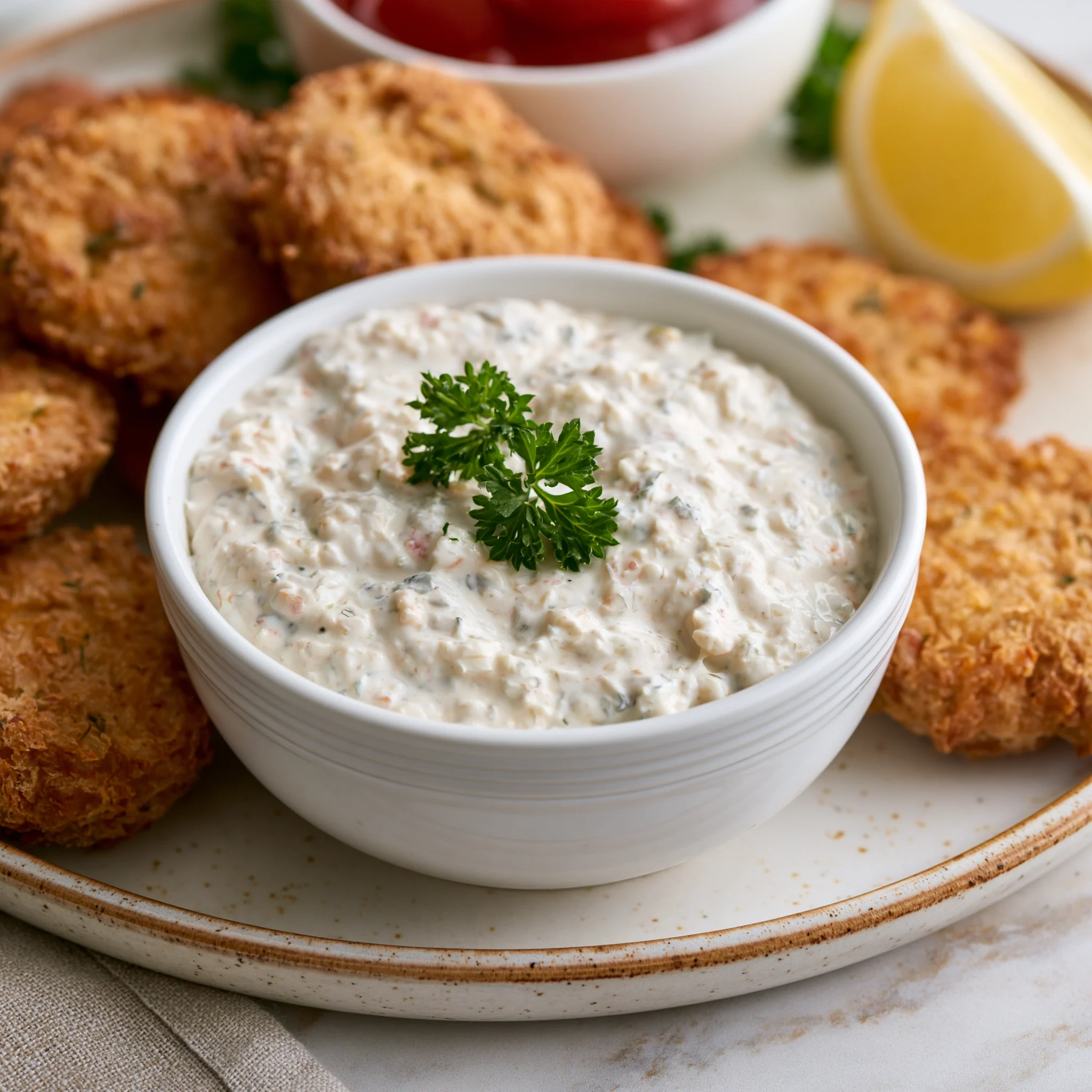
Tartar sauce is the silent hero of seafood cuisine, transforming simple fried or grilled dishes into something refined and unforgettable. Its creamy texture and tangy profile create a perfect contrast that enhances every bite it touches.
Unlike heavy dressings, tartar sauce is all about balance. The combination of creamy mayonnaise, sharp pickles, and fresh citrus creates a bright, refreshing flavor that cuts through richness without overpowering the main dish.
In professional kitchens, tartar sauce is considered essential for seafood plating. From crispy fish fillets to shrimp and calamari, it adds a cool, zesty layer that elevates texture and taste instantly.
This recipe focuses on precision and freshness. Every ingredient is measured to maintain harmony, ensuring a smooth, restaurant-quality sauce that delivers consistency, flavor depth, and a clean finishing touch to seafood dishes.
Table of Contents
Ingredients You’ll Need
Base Ingredients:
- Mayonnaise: 1 cup
- Pickles (finely chopped): 3 tbsp
- Lemon juice: 1 tbsp
- Mustard: 1 tsp
- Salt: ½ tsp
- Black pepper: ¼ tsp
- Onion (finely minced): 2 tbsp
- Parsley (chopped): 1 tbsp
Optional Add-ins:
- Capers: 1 tbsp
- Garlic powder: ½ tsp
- Dill: 1 tsp (fresh or dried)
- Hot sauce: few drops for spice
Step-by-Step Intrusions
Base Formation and Flavor Setup
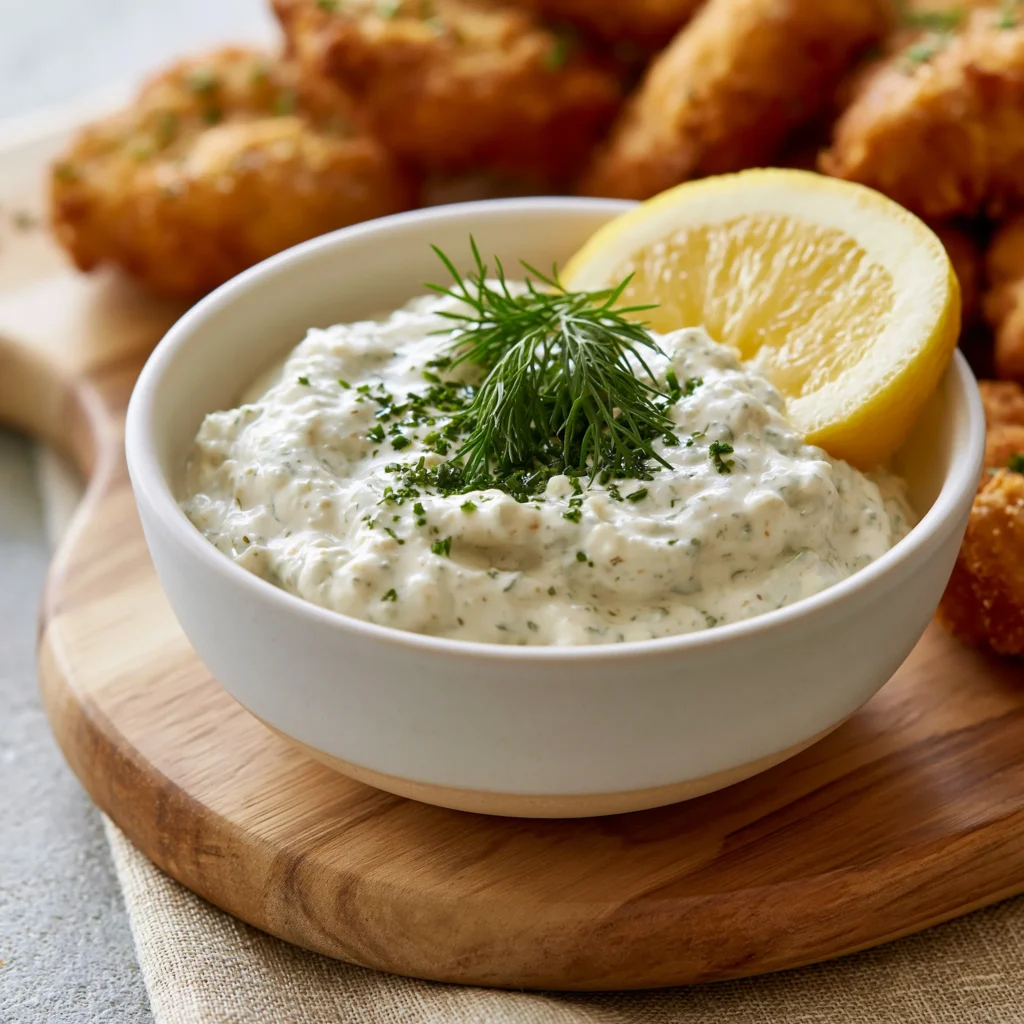
Start by placing mayonnaise in a clean mixing bowl. Add finely chopped pickles and minced onion to build the foundation of texture and flavor. Stir gently to ensure even distribution without breaking the creamy base.
This step is essential for balance. The mayonnaise provides richness, while pickles introduce acidity and crunch. Proper mixing ensures each bite has consistent flavor and smooth texture, setting the tone for a professional-quality tartar sauce.
Flavor Enhancement and Seasoning Balance
Add lemon juice, mustard, salt, and black pepper into the mixture. Stir slowly to blend all components evenly. Each ingredient should complement the base without overpowering the delicate creamy structure of the sauce.
Taste and adjust seasoning gradually. The goal is a bright, tangy profile with subtle heat and freshness. Proper balance ensures the sauce enhances seafood rather than masking its natural flavor.
Final Texture and Resting Process
Fold in chopped parsley and optional add-ins like dill or capers. Mix gently to maintain texture integrity while distributing herbs evenly throughout the sauce for visual and flavor enhancement.
Cover and refrigerate for at least 30 minutes. This resting period allows flavors to meld together, creating a more cohesive, refined, and restaurant-style tartar sauce with improved depth and freshness.
Cook Time
Total: 35 minutes (including resting time)
Prep: 10 minutes
Bake: No baking required
Servings
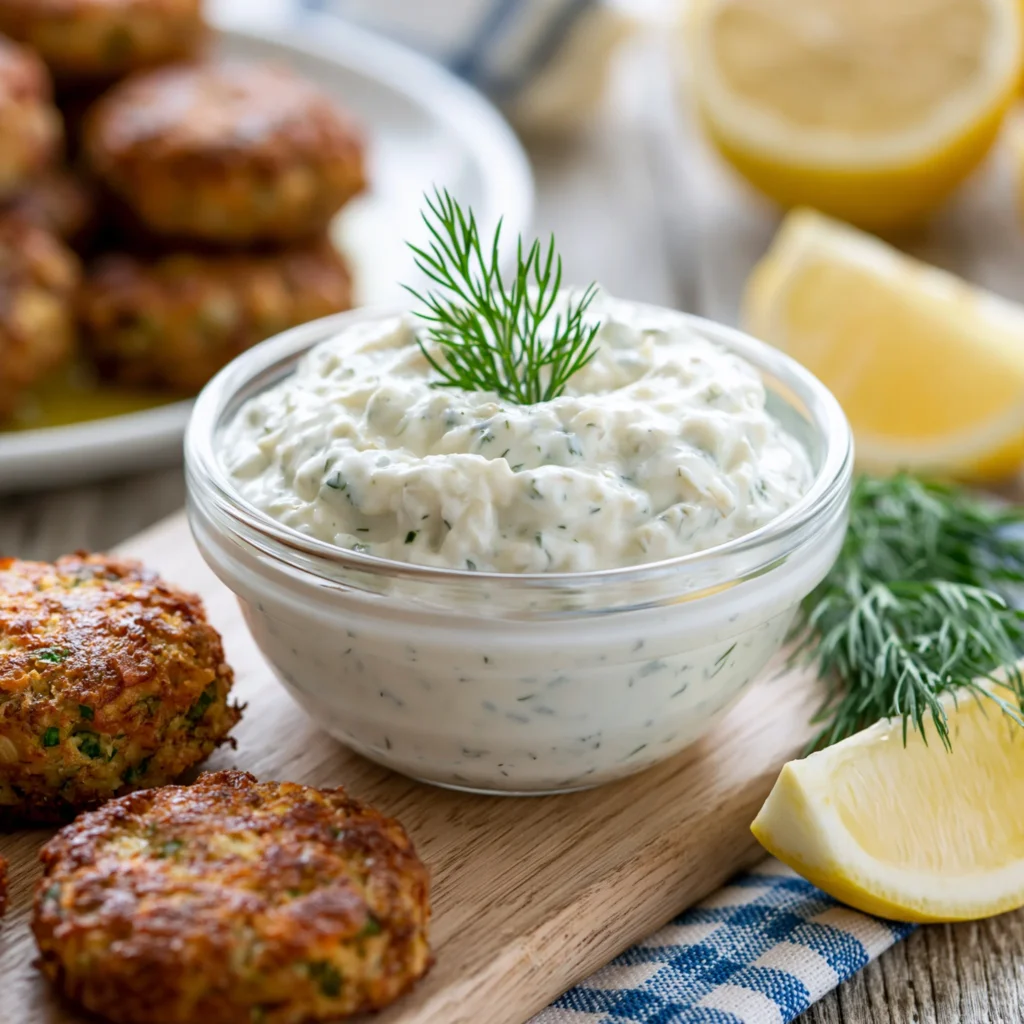
Tartar sauce is designed as a complementary condiment rather than a standalone dish. It is typically served in small portions alongside seafood dishes, enhancing flavor without overwhelming the main ingredients.
Each serving adds a creamy, tangy layer that balances fried or grilled textures. Its richness is controlled, making it suitable for light and indulgent meals alike, depending on usage.
This recipe yields approximately 6 to 8 servings, depending on portion size. It is ideal for family meals, seafood platters, or casual dining where multiple dishes are shared.
Common Mistake in Tartar Sauce Preparation
One of the most common mistakes is over-chopping pickles into a paste-like texture. This removes the essential crunch that gives tartar sauce its signature bite and reduces overall texture contrast.
Another frequent issue is using too much mayonnaise without balancing acidity. This results in a heavy, overly rich sauce that lacks freshness and fails to complement seafood properly.
Incorrect seasoning is also a major problem. Adding excessive salt or mustard can overpower delicate flavors, making the sauce too sharp instead of balanced and refreshing.
Skipping resting time is another mistake. Without allowing flavors to blend, the sauce tastes separated and incomplete, lacking the smooth harmony expected in a well-prepared tartar sauce.
Solution to Common Mistake in This Recipe
Always chop pickles and onions finely but not into a paste. This preserves texture and ensures each bite delivers a satisfying contrast between creaminess and crunch.
Balance mayonnaise with fresh lemon juice and mustard in controlled amounts. This ensures the sauce remains light, tangy, and refreshing instead of overly rich or heavy.
Season gradually and taste at each stage. Small adjustments help maintain control over flavor intensity and prevent overpowering the delicate seafood pairing profile.
Allow the sauce to rest in the refrigerator before serving. This step enhances flavor integration and creates a smoother, more refined and cohesive final result.
Nutritional Information (approx. per serving)
- Calories: 110 kcal
- Fat: 10g
- Carbohydrates: 3g
- Protein: 0.5g
- Sodium: 180mg
- Sugar: 1g
This sauce provides energy mainly through healthy fats from mayonnaise, which help create satiety when paired with lighter seafood dishes.
The presence of lemon juice adds a small amount of vitamin C, contributing to freshness and mild antioxidant support in the diet.
Pickles and herbs offer digestive benefits and enhance flavor naturally without adding excessive calories or artificial ingredients.
Overall, tartar sauce is a flavorful condiment best enjoyed in moderation as part of balanced seafood-based meals.
Storage Instructions
Tartar sauce should always be stored in an airtight container to preserve freshness and prevent contamination from other foods in the refrigerator.
It remains fresh for up to 3–4 days when properly chilled. After this period, texture and flavor may begin to degrade slightly.
Always refrigerate immediately after preparation. Leaving it at room temperature can cause separation and reduce its creamy consistency and safety.
Before serving again, stir gently to restore uniform texture and ensure all ingredients are well blended for best flavor experience.
Suggestions
For enhanced flavor, add a small amount of dill or capers. These ingredients elevate complexity and bring a more gourmet seafood pairing experience.
Pair tartar sauce with fried fish, shrimp, calamari, or even fish sandwiches for a classic and satisfying combination that enhances every bite.
For a lighter version, use half yogurt and half mayonnaise. This reduces richness while maintaining creamy texture and tangy balance.
Serve chilled for best results. Cold temperature enhances freshness and ensures the sauce complements hot seafood dishes perfectly.
Seasonal Relevance
Tartar sauce is especially popular during summer months when seafood dishes are commonly enjoyed in lighter, refreshing meals.
In warm seasons, its tangy and cool profile provides contrast to fried or grilled seafood, enhancing overall dining balance.
During winter, it pairs well with heavier fried seafood platters, adding brightness and cutting through richness effectively.
It remains a year-round staple in coastal and festive seafood dining traditions across many cuisines.
Final Words
Tartar sauce is more than just a condiment—it is a carefully balanced element that elevates seafood dishes to professional quality.
Its success lies in precision, where creamy richness meets tangy brightness in perfect harmony without overwhelming the main dish.
When prepared correctly, it enhances texture, flavor, and overall dining experience with effortless sophistication.
This recipe delivers a reliable, restaurant-style tartar sauce that brings consistency, freshness, and culinary confidence to your kitchen.
Frequently Asked Questions
Can tartar sauce be made without mayonnaise?
Yes, tartar sauce can be made using Greek yogurt or a yogurt-based alternative instead of mayonnaise. This creates a lighter version with fewer calories while maintaining creaminess. The flavor becomes slightly tangier, making it suitable for health-conscious seafood meals.
What seafood pairs best with tartar sauce?
Tartar sauce pairs exceptionally well with fried fish, shrimp, calamari, and crab cakes. Its creamy and tangy profile balances crispy textures and enhances natural seafood flavors. It is especially popular with battered or deep-fried seafood dishes for added freshness.
Can tartar sauce be prepared in advance for parties?
Yes, tartar sauce is ideal for advance preparation. Making it a few hours ahead allows flavors to blend more effectively. Store it in the refrigerator in a sealed container to maintain freshness, texture, and taste until ready to serve.
Tartar Sauce Recipe Perfect for Seafood Lovers
6
servings15
minutes35
minutes110
kcalTartar sauce is a creamy, tangy seafood condiment made with mayonnaise, pickles, lemon juice, and herbs. This easy homemade recipe delivers a refreshing balance of flavors that perfectly complements fried fish, shrimp, and other seafood dishes.
Ingredients
Mayonnaise: 1 cup
Pickles (finely chopped): 3 tbsp
Lemon juice: 1 tbsp
Mustard: 1 tsp
Salt: ½ tsp
Black pepper: ¼ tsp
Onion (finely minced): 2 tbsp
Parsley (chopped): 1 tbsp
Optional Add-ins:
Capers: 1 tbsp
Garlic powder: ½ tsp
Dill: 1 tsp (fresh or dried)
Hot sauce: few drops for spice
Directions
- Add mayonnaise to a mixing bowl as the base.
- Mix in chopped pickles, onion, and parsley.
- Add lemon juice, mustard, salt, and pepper.
- Stir gently until smooth and well combined.
- Add optional ingredients for extra flavor.
- Refrigerate for 30 minutes before serving.
Recipe Video
Notes
- Finely chop pickles for best texture.
- Always chill before serving for enhanced flavor.
- Do not overuse mustard to maintain balance.
- Store in airtight container to keep freshness.
- Best served cold with seafood dishes.