
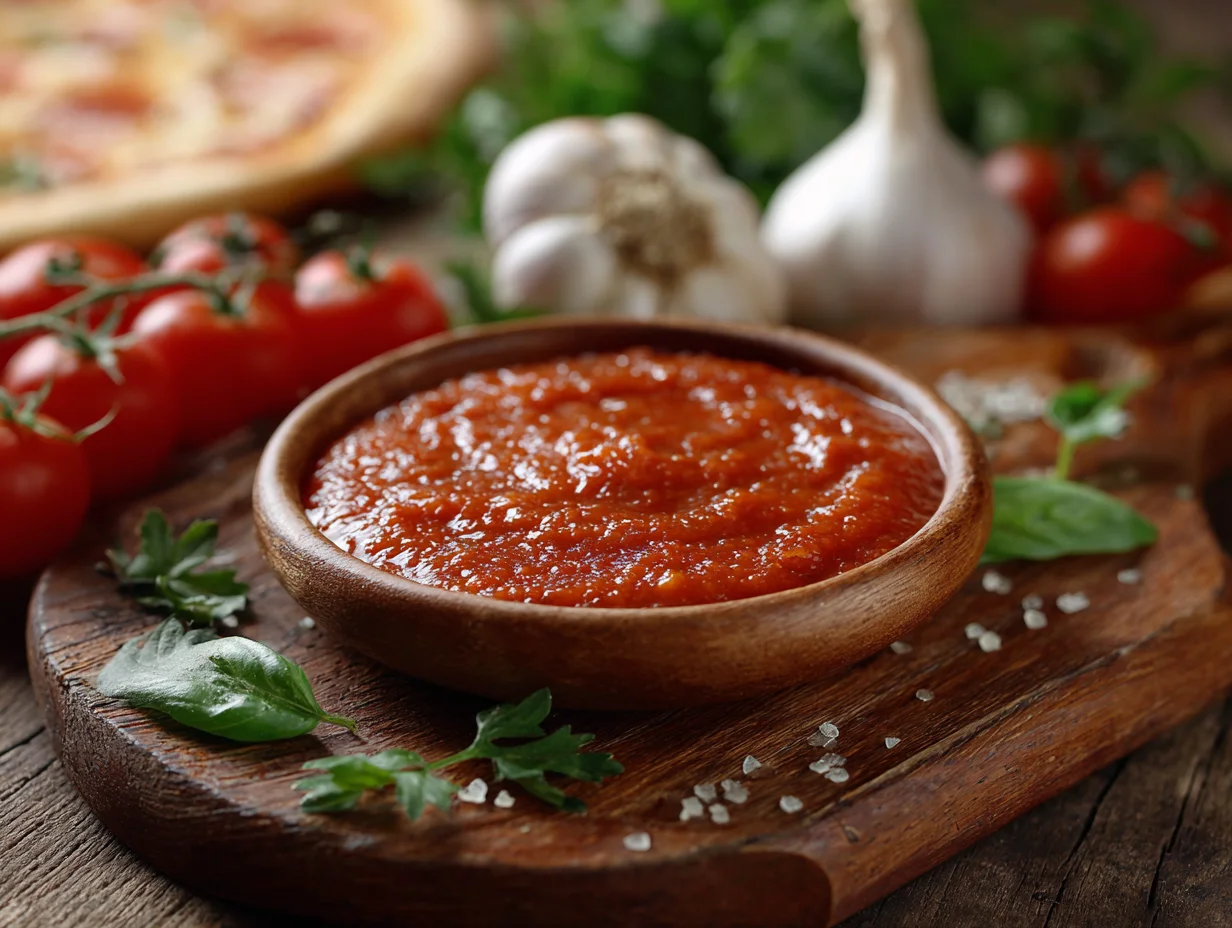
A truly great pizza begins with its sauce. Pizza sauce is the heart of flavor, delivering rich tomato depth, balanced acidity, and aromatic herbs that define every bite. When made correctly, it transforms a simple dough into a restaurant-quality pizza experience.
What makes this sauce exceptional is its simplicity and precision. Using ripe tomatoes, olive oil, garlic, and Italian herbs creates a bold yet balanced base that enhances cheese, vegetables, and meats without overpowering them.
Unlike store-bought versions, homemade pizza sauce allows full control over seasoning, texture, and freshness. This ensures a cleaner, more vibrant taste that elevates every homemade pizza you prepare.
Whether you’re making classic Margherita or loaded veggie pizza, this sauce delivers consistent, rich flavor that makes every slice unforgettable.
Table of Contents
Ingredients You’ll Need
Base Ingredients:
- Crushed tomatoes – 2 cups
- Olive oil – 2 tbsp
- Garlic cloves – 2 (minced)
- Salt – 1 tsp
- Black pepper – ½ tsp
- Sugar – 1 tsp
- Dried oregano – 1 tsp
- Dried basil – 1 tsp
- Red chili flakes – ½ tsp
- Tomato paste – 2 tbsp
Optional Add-ins:
- Onion powder – ½ tsp
- Fresh basil – 2 tbsp (chopped)
- Fresh parsley – 1 tbsp
- Balsamic vinegar – 1 tsp
- Thyme – ½ tsp
Step-by-Step Intrusions

Step 1: Building the Tomato Base
Start by heating olive oil in a pan over medium heat. Add minced garlic and sauté gently until fragrant but not browned. This step releases aromatic oils that form the foundation of the sauce. Add crushed tomatoes and tomato paste, stirring well to combine.
This creates a thick, rich base that carries all flavors. Proper cooking at this stage ensures depth and prevents raw tomato taste. The base should be smooth, vibrant, and evenly blended.
Step 2: Adding Seasoning and Herbs
Add salt, black pepper, sugar, oregano, basil, and chili flakes to the tomato mixture. Stir thoroughly so the spices distribute evenly. This step builds the signature Italian-style flavor profile of pizza sauce.
Sugar balances acidity, while herbs add aroma and complexity. Allow the mixture to simmer gently so flavors infuse properly. Proper seasoning ensures the sauce is not too sour or bland, creating a perfectly balanced taste for pizza.
Step 3: Simmering for Flavor Development
Reduce heat and let the sauce simmer for 10–15 minutes, stirring occasionally. This allows excess moisture to evaporate, thickening the sauce naturally. Simmering deepens flavor and enhances the richness of tomatoes and herbs.
The sauce should become smooth, thick, and spreadable. Proper cooking at this stage is essential for achieving restaurant-style consistency. Avoid overcooking to maintain freshness and vibrant tomato color. This step defines the final texture of the sauce.
Step 4: Final Adjustment and Cooling
Taste the sauce and adjust seasoning if needed by adding salt, herbs, or a pinch of sugar. Once balanced, remove from heat and let it cool completely before using. Cooling allows flavors to settle and intensify.
The sauce thickens further as it rests, making it perfect for spreading on pizza dough. Proper resting ensures a rich, well-rounded flavor that enhances every homemade pizza creation.
Cook Time
Total: 20 minutes
Prep: 5 minutes
Bake: 15 minutes
Servings
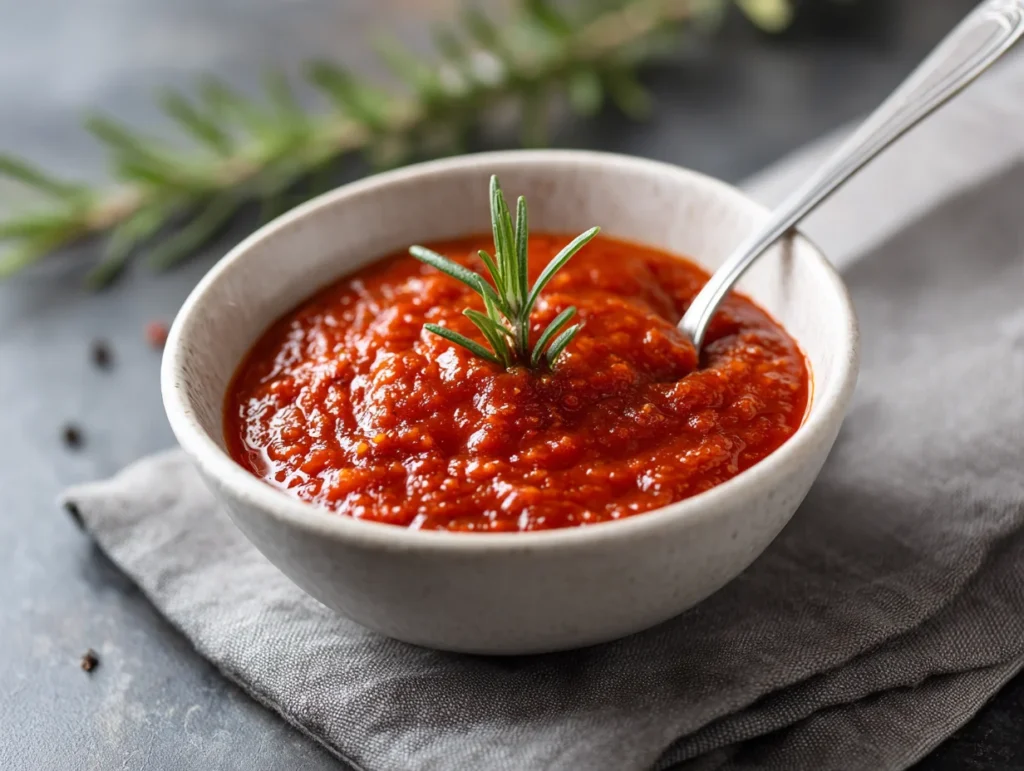
This pizza sauce recipe serves approximately 4–6 pizzas depending on size and usage. Each serving is rich, flavorful, and designed to evenly coat pizza bases without overpowering toppings.
The portion is ideal for home baking sessions, allowing multiple pizzas to be prepared with consistent taste and quality. A small amount delivers strong flavor impact due to its concentrated tomato base.
Each serving ensures a balanced, restaurant-style pizza experience with every slice.
Common Mistake in Pizza Sauce Recipe
One common mistake is using raw, unseasoned tomatoes without proper cooking, resulting in a sharp and unbalanced flavor.
Another issue is skipping the simmering process, which prevents the sauce from developing depth and thickness.
Many people also overuse herbs, making the sauce taste bitter and overpowering instead of balanced.
Finally, not adjusting acidity leads to overly sour sauce that fails to complement pizza toppings.
Solution for Pizza Sauce Recipe
Always cook tomatoes properly to develop a rich and smooth base flavor.
Simmer the sauce to reduce excess moisture and enhance natural sweetness.
Use herbs in balanced quantities to maintain harmony without overpowering the tomato base.
Adjust acidity with a small amount of sugar for a well-rounded, professional taste.
Nutritional Information (approx. per serving)
- Calories: 80
- Fat: 5g
- Carbohydrates: 9g
- Sugar: 4g
- Fiber: 2g
- Sodium: 200mg
This sauce is low in calories and rich in antioxidants from tomatoes, making it a healthier base for homemade pizza.
Olive oil provides healthy fats that support heart health when used in moderation.
Herbs and garlic add natural flavor and beneficial plant compounds.
Storage Instructions
Store pizza sauce in an airtight container in the refrigerator immediately after cooling.
It stays fresh for up to 5–7 days when properly stored.
For longer storage, freeze in portions for up to 2 months.
Always stir before use to restore smooth consistency.
Suggestions
Use this pizza sauce as a base for classic Margherita, pepperoni, or veggie pizzas.
It also works well as a dipping sauce for breadsticks and garlic knots.
You can mix it into pasta dishes for quick tomato flavor.
It enhances homemade calzones and flatbreads beautifully.
Seasonal Relevance
Pizza sauce is a year-round kitchen essential that fits all seasons.
In summer, it pairs well with fresh vegetable pizzas and light meals.
During winter, it enhances baked comfort foods and cheesy dishes.
Its versatility makes it a staple for any homemade cooking style.
Final Words
Pizza sauce is the foundation of every great homemade pizza.
With the right balance of tomatoes, herbs, and seasoning, it delivers authentic Italian-style flavor.
Its simplicity makes it easy to prepare yet powerful in taste.
Once mastered, it becomes an essential recipe for every kitchen.
Frequently Asked Questions
Can I use fresh tomatoes instead of canned?
Yes, fresh tomatoes can be used, but they should be cooked longer to reduce moisture and enhance flavor. Canned tomatoes are preferred for consistent texture and rich taste in pizza sauce.
How thick should pizza sauce be?
Pizza sauce should be thick enough to spread easily without running. It should coat the pizza base evenly without making it soggy during baking.
Can pizza sauce be frozen?
Yes, pizza sauce freezes very well. Store it in airtight containers or freezer bags and use within 2 months. Thaw and stir before using for best results.
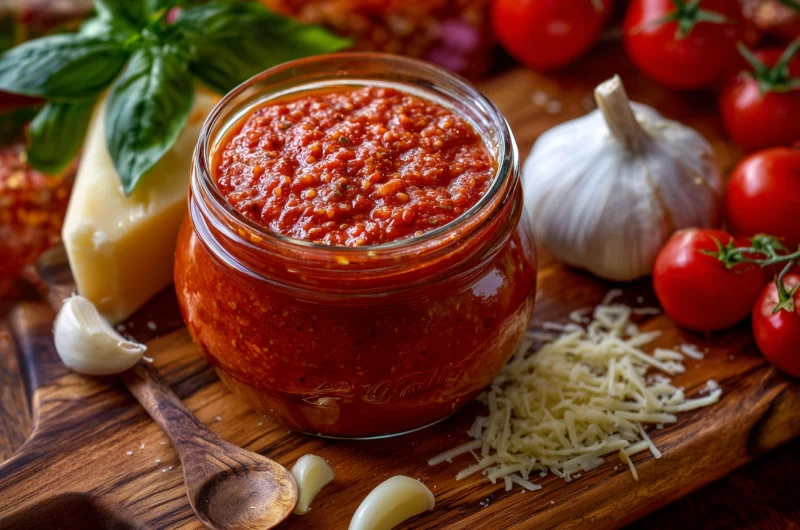
Pizza Sauce Recipe That’s Perfect Every Time
4
servings10
minutes15
minutes80
kcalClassic homemade pizza sauce made with ripe tomatoes, olive oil, garlic, and Italian herbs. Rich, aromatic, and perfectly balanced, this sauce delivers authentic restaurant-style flavor and enhances every homemade pizza with bold, fresh, and savory taste.
Ingredients
Crushed tomatoes – 2 cups
Olive oil – 2 tbsp
Garlic cloves – 2 (minced)
Salt – 1 tsp
Black pepper – ½ tsp
Sugar – 1 tsp
Dried oregano – 1 tsp
Dried basil – 1 tsp
Red chili flakes – ½ tsp
Tomato paste – 2 tbsp
Optional Add-ins:
Onion powder – ½ tsp
Fresh basil – 2 tbsp (chopped)
Fresh parsley – 1 tbsp
Balsamic vinegar – 1 tsp
Thyme – ½ tsp
Directions
- Heat olive oil in a pan, sauté garlic until fragrant. Add crushed tomatoes and tomato paste, mix well. Season with salt, pepper, sugar, oregano, basil, and chili flakes. Simmer for 10–15 minutes until thickened. Adjust seasoning, cool before using on pizza.
Recipe Video
Notes
- Simmer properly for rich flavor
- Do not overuse herbs
- Adjust sugar to balance acidity
- Cool completely before spreading
- Store in airtight container
- Best used within 5–7 days or frozen for longer storage