
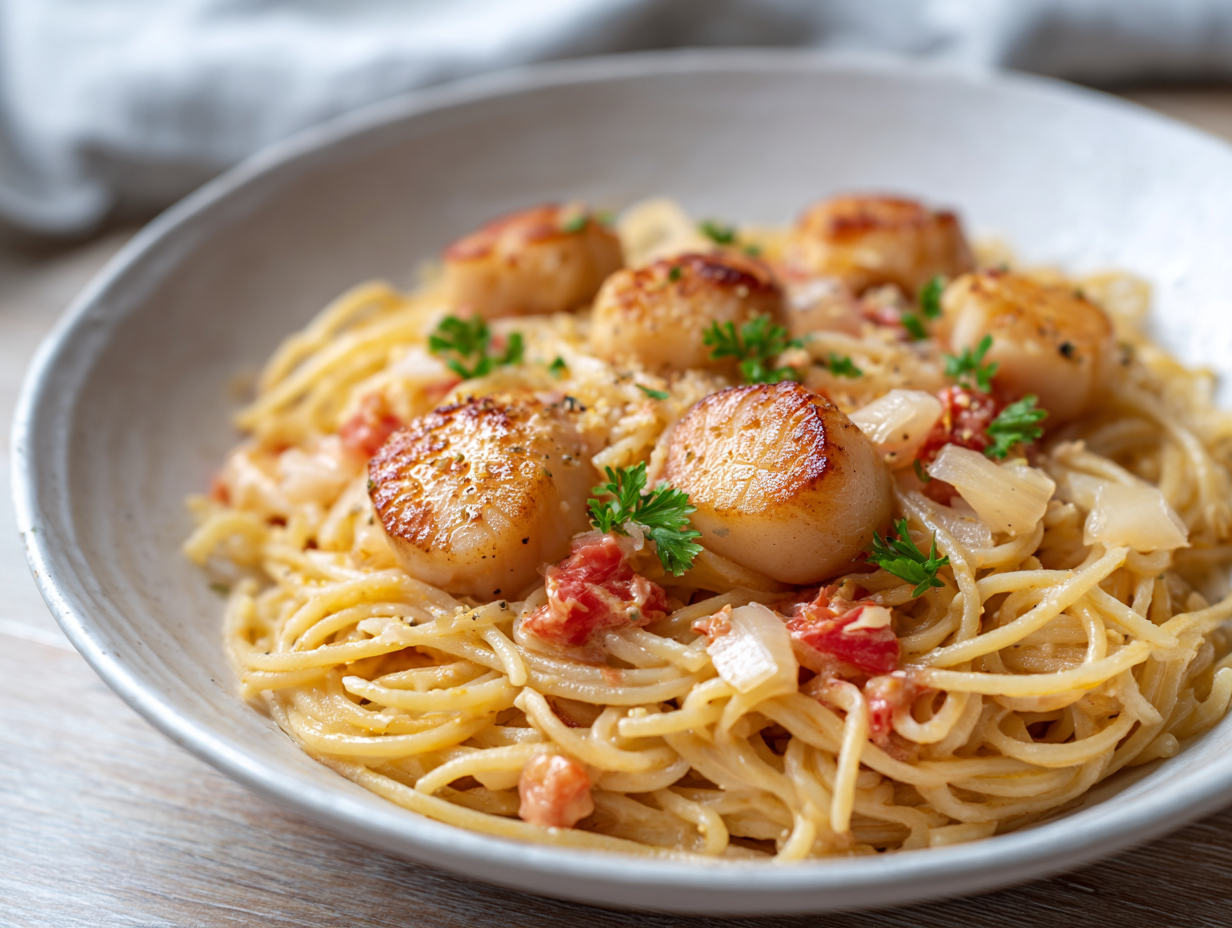
There are few dishes that feel as luxurious yet approachable as creamy scallops pasta. Perfectly seared scallops paired with a silky, rich sauce create a restaurant-quality experience that instantly elevates any dining table.
This recipe is designed with precision and balance in mind. The sweetness of scallops, the depth of cream, and the structure of perfectly cooked pasta work together to create a dish that feels indulgent without being overwhelming.
As a chef, I focus on technique, because scallops demand respect. Timing, heat control, and ingredient quality are the difference between a good dish and an exceptional one.
If you’re looking to master a premium pasta recipe that delivers high-end flavor and visual appeal, this guide will help you achieve consistent, refined results every time.
Table of Contents
Ingredients You’ll Need
Base Ingredients:
- Scallops (fresh, cleaned) – 400g
- Pasta (fettuccine or linguine) – 250g
- Heavy cream – 1 cup
- Garlic (minced) – 3 cloves
- Butter – 2 tbsp
- Olive oil – 2 tbsp
- Parmesan cheese (grated) – ½ cup
- Salt – 1 tsp
- Black pepper – ½ tsp
Optional Add-ins:
- Lemon juice – 1 tbsp
- Fresh parsley (chopped) – 2 tbsp
- Red chili flakes – ½ tsp
- White wine – ¼ cup
- Spinach – 1 cup
Step-by-Step Intrusions
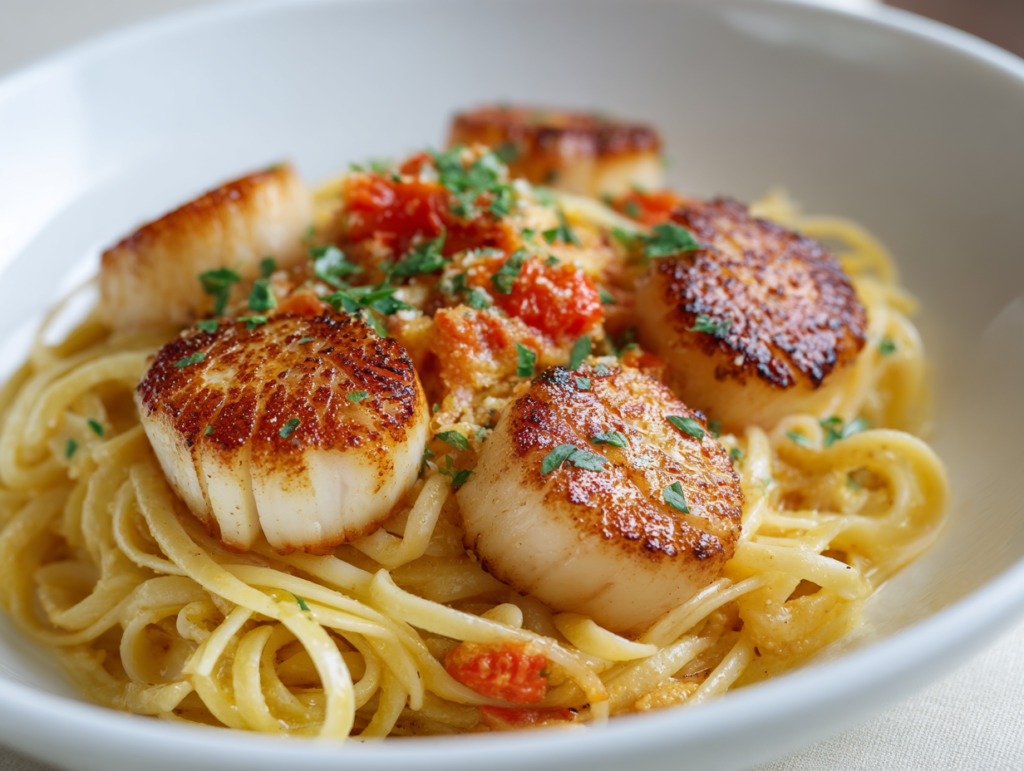
Step 1: Prepare and Sear the Scallops
Pat scallops completely dry using paper towels. This is critical for achieving a golden crust. Heat olive oil in a pan over high heat until shimmering.
Place scallops in the pan without overcrowding and sear for 1–2 minutes per side until golden brown. Avoid moving them prematurely to develop a proper crust.
Remove and set aside once cooked. Proper searing locks in flavor and creates a rich, caramelized exterior that defines a premium scallops pasta dish.
Step 2: Cook the Pasta Perfectly
Bring a large pot of salted water to a rolling boil and cook pasta according to package instructions until al dente. Reserve half a cup of pasta water before draining. This starchy water is essential for adjusting sauce consistency later.
Avoid overcooking, as pasta will continue to cook slightly when combined with the sauce. Properly cooked pasta ensures the final dish has the right texture, providing a firm yet tender bite that complements the creamy sauce.
Step 3: Build the Creamy Sauce
In the same pan, melt butter and sauté garlic until fragrant but not browned. Add white wine if using and let it reduce slightly. Pour in heavy cream and simmer gently. Stir in Parmesan cheese, salt, and pepper, allowing the sauce to thicken gradually.
Add reserved pasta water as needed to achieve a silky consistency. This step creates the rich base that binds the entire dish together, delivering depth and smoothness without overpowering the scallops.
Step 4: Combine and Finish
Add cooked pasta to the sauce and toss gently to coat evenly. Return scallops to the pan and let them warm through briefly. Finish with lemon juice, parsley, and chili flakes if desired. Toss lightly to combine without breaking the scallops.
Serve immediately for best results. This final step ensures harmony between all components, delivering a balanced dish with creamy richness, delicate seafood flavor, and a refined finish.
Cook Time
Total: 30 minutes
Prep: 10 minutes
Bake: 20 minutes
Servings
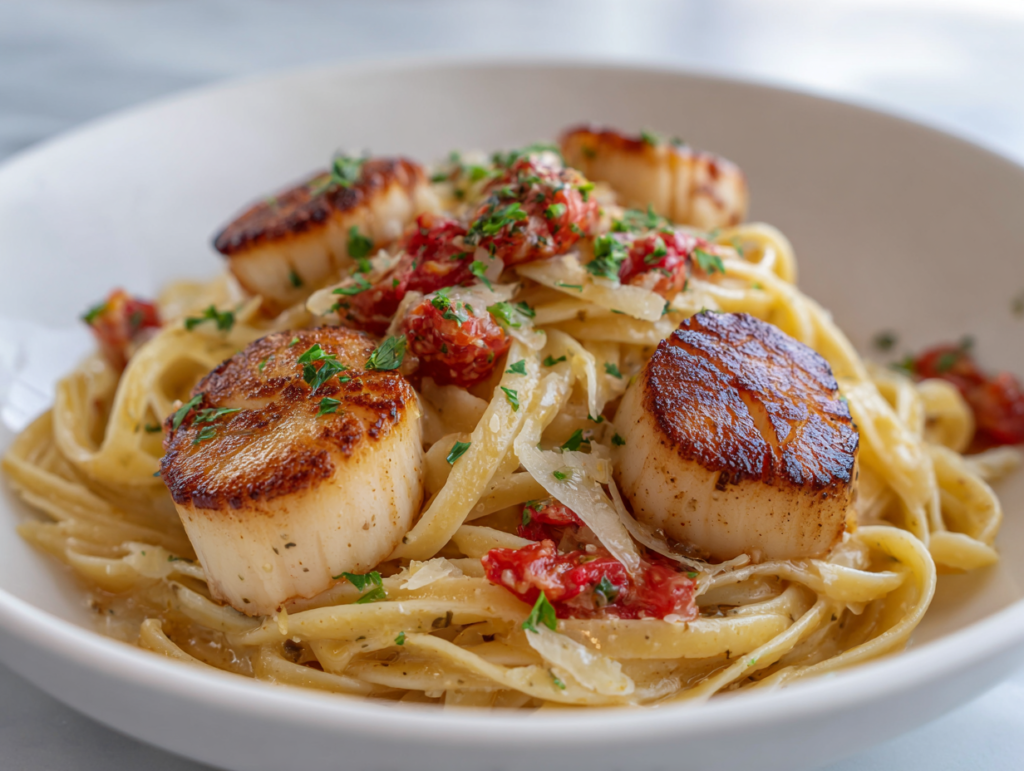
This recipe is crafted to serve 3 to 4 people, making it ideal for intimate dinners or small gatherings where quality matters more than quantity. Each portion delivers a rich, balanced combination of seafood and creamy pasta.
The dish is filling yet refined, ensuring that each serving feels satisfying without being overly heavy. Portion control is key to maintaining the dish’s premium appeal and avoiding overwhelming richness.
Makes approximately 4 servings, each plated with evenly distributed scallops and sauce. This ensures consistency in flavor, texture, and presentation across every serving.
Common Errors That Ruin Scallops Pasta
One of the most common mistakes is not drying scallops properly. Moisture prevents proper searing, resulting in a pale, rubbery texture instead of a golden crust. This significantly impacts both flavor and presentation.
Another issue is overcooking scallops. Even a minute too long can turn them tough and chewy, removing their natural tenderness and sweetness that define the dish.
Many cooks also make the mistake of using high heat for the cream sauce, causing it to separate or become overly thick. This ruins the smooth texture required for a premium dish.
Lastly, poorly cooked pasta can disrupt the balance. Overcooked pasta becomes mushy, while undercooked pasta doesn’t absorb sauce properly, affecting the overall experience.
Expert Fixes for a Perfect Creamy Pasta
Always pat scallops dry before cooking. This ensures proper caramelization and prevents steaming, giving you a professional-quality sear every time.
Cook scallops briefly over high heat and remove them early. They will continue cooking slightly when added back to the sauce, maintaining tenderness.
Use gentle heat when preparing the cream sauce. This prevents splitting and helps achieve a smooth, velvety consistency.
Cook pasta al dente and reserve pasta water. This allows you to control sauce thickness and ensures perfect integration between pasta and sauce.
Nutritional Information (approx. per serving)
- Calories – 420 kcal
- Protein – 22g
- Carbohydrates – 35g
- Fat – 22g
- Fiber – 2g
- Calcium – 180mg
Scallops are an excellent source of lean protein, supporting muscle health and providing sustained energy without excessive fat.
The dish contains essential minerals like calcium and phosphorus from cheese, contributing to bone health and overall strength.
Healthy fats from olive oil and butter enhance nutrient absorption and add depth to the dish without compromising balance.
When prepared correctly, this pasta offers a satisfying yet controlled indulgence, making it suitable for occasional premium meals.
Storage Instructions
Allow the pasta to cool slightly before storing to avoid condensation buildup, which can affect sauce consistency.
Store in an airtight container in the refrigerator for up to two days. Seafood dishes are best consumed fresh, so avoid extended storage.
Reheat gently over low heat, adding a splash of cream or water to restore the sauce’s smooth texture.
Avoid microwaving at high heat, as it can overcook scallops and cause the sauce to separate.
Suggestions
Pair this dish with a light green salad or steamed vegetables to balance the richness of the creamy sauce.
Serve with fresh lemon wedges for an added layer of brightness that enhances the seafood flavor.
Use high-quality Parmesan cheese for a deeper, more authentic taste profile.
Plate immediately after cooking to maintain the dish’s visual appeal and texture quality.
Seasonal Relevance
This dish works beautifully year-round due to its balance of richness and freshness.
In colder months, its creamy texture provides comfort and warmth, making it ideal for cozy dinners.
During warmer seasons, the addition of lemon and herbs keeps the dish light and refreshing.
Its versatility makes it suitable for both everyday meals and special occasions.
Finl Words
Creamy scallops pasta is a dish that rewards attention to detail. Each step contributes to the final result, making precision essential.
This recipe is designed to help you achieve consistent, high-quality results without unnecessary complexity.
Focus on technique, ingredient quality, and timing to elevate your cooking beyond average.
With practice, this dish can become a signature meal that impresses every time.
Frequently Asked Questions
Can I use frozen scallops for this recipe?
Yes, frozen scallops can be used if properly thawed. Ensure they are completely defrosted and patted dry before cooking. Excess moisture can prevent proper searing, so drying thoroughly is essential for achieving the desired texture and flavor.
What pasta works best with scallops?
Fettuccine and linguine are ideal because they hold creamy sauces well. Their flat structure allows even coating, ensuring every bite delivers balanced flavor. Avoid very thin or overly thick pasta shapes, as they may not complement the delicate texture of scallops.
How do I know when scallops are perfectly cooked?
Scallops are done when they turn opaque and develop a golden crust on the outside. They should feel slightly firm but still tender. Overcooking makes them rubbery, so it’s important to remove them from heat promptly once they reach this stage.
Creamy Scallops Pasta Recipe
4
servings10
minutes20
minutes425
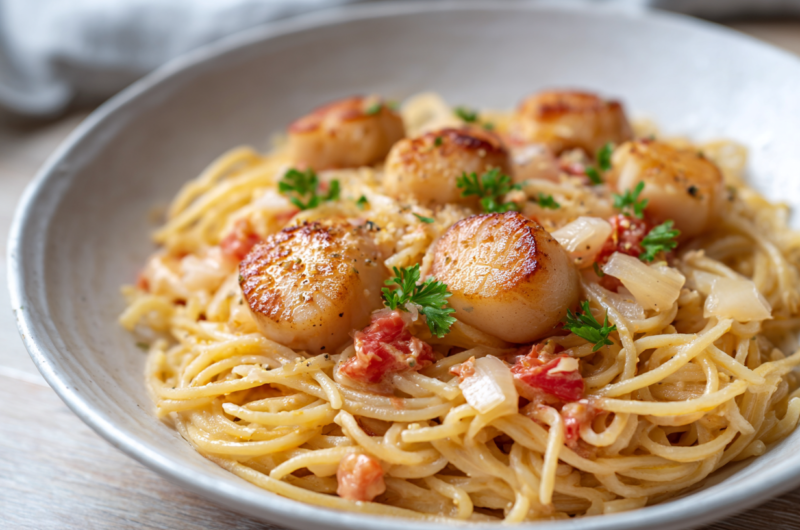
kcalCreamy scallops pasta combines perfectly seared scallops with a rich, velvety sauce and al dente pasta. This elegant yet simple dish delivers restaurant-quality flavor, making it ideal for special dinners or refined everyday meals at home.
Ingredients
Scallops (fresh, cleaned) – 400g
Pasta (fettuccine or linguine) – 250g
Heavy cream – 1 cup
Garlic (minced) – 3 cloves
Butter – 2 tbsp
Olive oil – 2 tbsp
Parmesan cheese (grated) – ½ cup
Salt – 1 tsp
Black pepper – ½ tsp
Optional Add-ins:
Lemon juice – 1 tbsp
Fresh parsley (chopped) – 2 tbsp
Red chili flakes – ½ tsp
White wine – ¼ cup
Spinach – 1 cup
Directions
- Pat scallops dry and sear in hot olive oil for 1–2 minutes per side until golden. Remove and set aside.
- Cook pasta in salted boiling water until al dente. Reserve ½ cup pasta water, then drain.
- In the same pan, melt butter, sauté garlic, add white wine (optional), then pour in cream and simmer. Stir in Parmesan, salt, and pepper.
- Add pasta to the sauce, adjusting consistency with reserved pasta water.
- Return scallops, add lemon juice and herbs, toss gently, and serve immediately.
Recipe Video
Notes
- Always dry scallops thoroughly for a perfect golden sear.
- Avoid overcooking scallops to maintain tenderness.
- Use reserved pasta water to control sauce consistency.
- Cook sauce on low heat to prevent splitting.
- Serve immediately for best texture and flavor.