
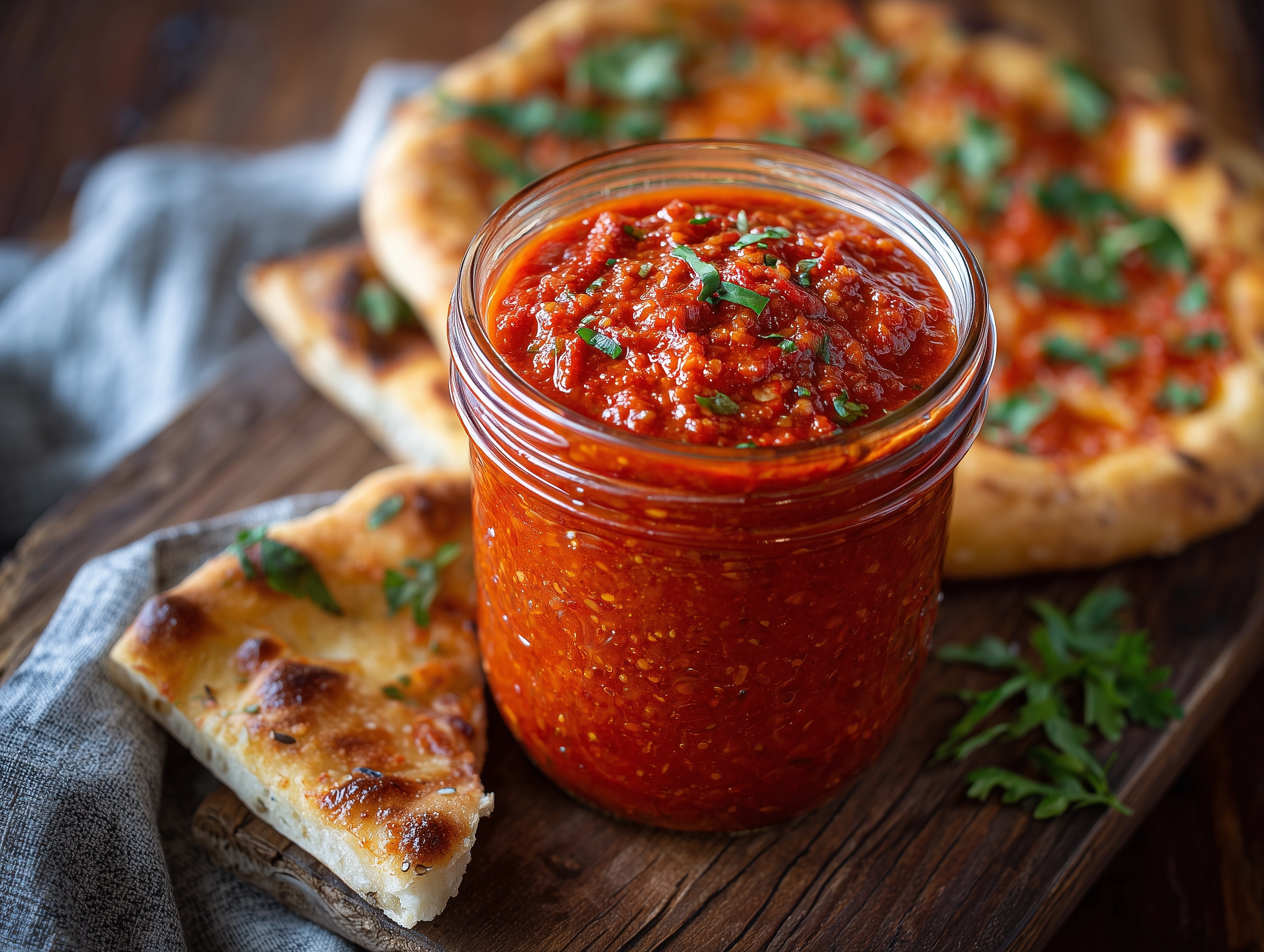
Homemade pizza sauce is the foundation of a truly premium pizza experience, something no store-bought jar can replicate. The right sauce doesn’t just sit beneath toppings; it defines the flavor profile, enhances texture, and delivers that authentic pizzeria-quality bite every food lover craves. If you’re serious about upgrading your home cooking, mastering this recipe is a high-impact, high-value skill.
From a professional chef’s perspective, exceptional pizza sauce is all about balance, technique, and ingredient quality. It’s not complicated, but it demands precision. The harmony between acidity, sweetness, and aromatics is what transforms basic ingredients into a rich, restaurant-grade sauce.
This recipe is crafted for consistency, scalability, and bold flavor, perfect for home cooks, food bloggers, and even small food businesses looking to improve quality and user satisfaction.
Once you taste this, you’ll understand why homemade always wins, every single time.
Table of Contents
Ingredients You’ll Need
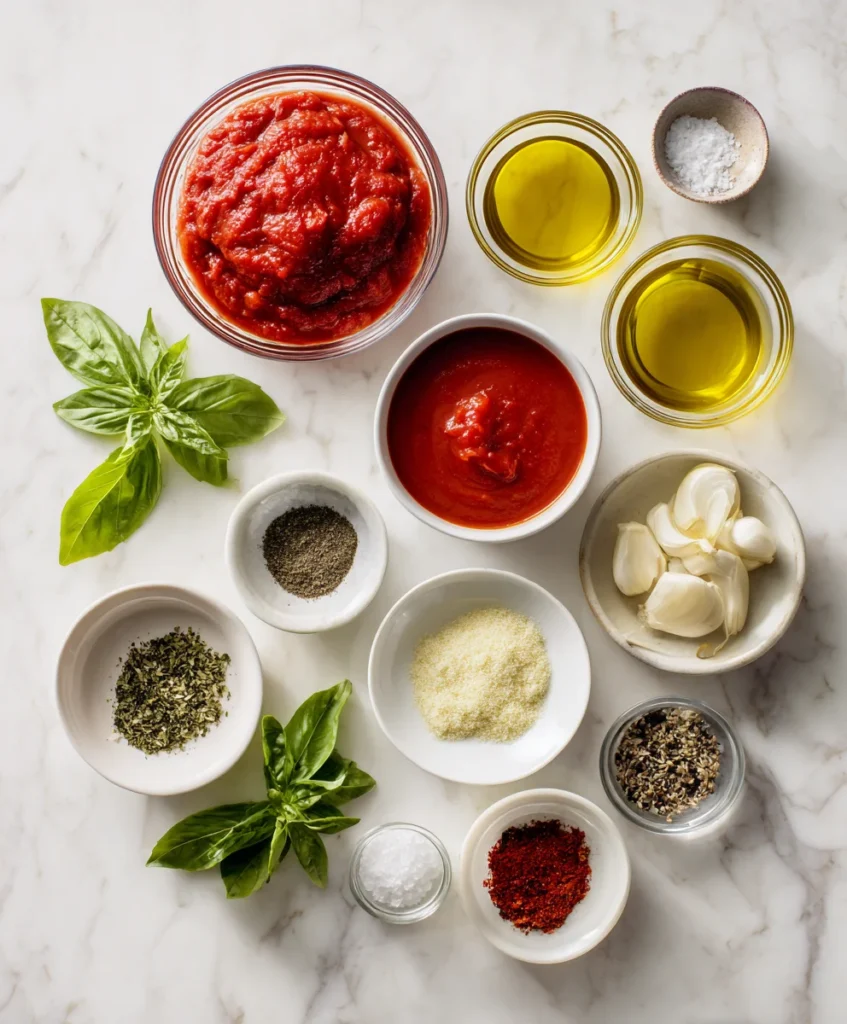
Base Ingredients:
- Crushed tomatoes – 2 cups
- Tomato paste – 2 tablespoons
- Extra virgin olive oil – 2 tablespoons
- Fresh garlic (minced) – 4 cloves
- Dried oregano – 1 teaspoon
- Dried basil – 1 teaspoon
- Fine salt – 1 teaspoon
- Black pepper – ½ teaspoon
- Sugar – 1 teaspoon
Optional Add-ins:
- Red chili flakes – ½ teaspoon
- Fresh basil – 5–6 leaves
- Onion powder – ½ teaspoon
- Parmesan cheese – 2 tablespoons
- Garlic powder – ½ teaspoon
Step-by-Step Intrusions
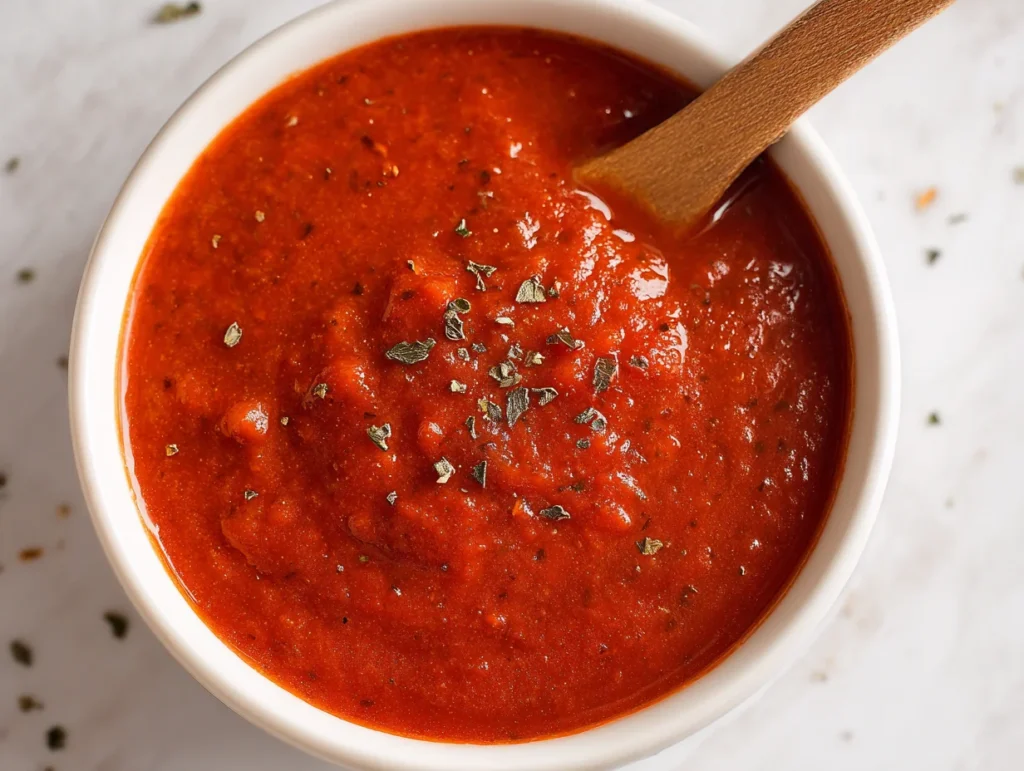
Step 1: Infuse Oil with Aromatics
Start by heating extra virgin olive oil over medium-low heat. Add freshly minced garlic and sauté gently until aromatic, ensuring it does not brown. This step is critical because it builds a flavor foundation that carries through the entire sauce.
The oil acts as a medium to extract and distribute garlic essence evenly. Maintain temperature control and stir consistently to avoid burning. A properly infused oil ensures your sauce has depth, richness, and a premium taste that mimics high-end restaurant pizza sauces.
Step 2: Combine Tomatoes for Texture and Body
Add crushed tomatoes and tomato paste into the pan, stirring thoroughly until smooth and well combined. This combination provides both texture and thickness, essential for a spreadable, non-watery pizza sauce.
Allow the mixture to simmer gently while stirring occasionally. Add sugar gradually to neutralize acidity and enhance natural sweetness. This step ensures the sauce achieves a balanced flavor profile that appeals to a wide audience while maintaining a professional, consistent quality suitable for both home and commercial use.
Step 3: Layer Seasoning for Depth of Flavor
Incorporate oregano, basil, salt, and black pepper into the simmering sauce. Stir well to distribute the seasoning evenly. Let the sauce cook uncovered for 15–20 minutes, allowing moisture to evaporate and flavors to concentrate.
Optional ingredients like chili flakes or parmesan can be added to customize taste. This slow reduction process enhances flavor density, improves texture, and creates a thick, rich sauce that clings perfectly to pizza dough without making it soggy.
Step 4: Optimize Texture and Final Taste
Taste the sauce and adjust seasoning according to preference. Blend lightly if a smoother consistency is desired, especially for commercial or presentation-focused use. Allow the sauce to cool slightly before application.
This ensures better spreadability and prevents dough from becoming too soft. A well-finished sauce should be thick, vibrant, and balanced, delivering a premium user experience with every bite, whether used immediately or stored for later use.
Cook Time
Total: 30 minutes
Prep: 10 minutes
Bake: 20 minutes
Servings
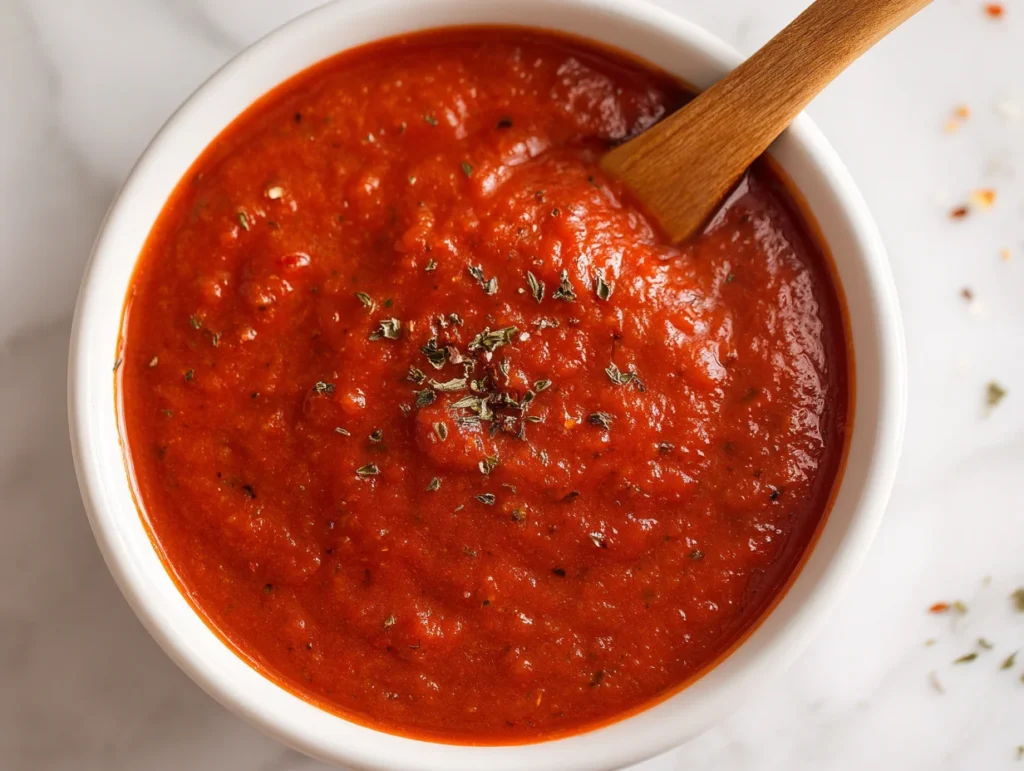
This recipe is optimized for efficiency and yield, producing enough sauce for 3 to 4 medium pizzas. It’s ideal for families, meal prep enthusiasts, and even small-scale food sellers who prioritize consistency and quality in every batch.
The portion size ensures that each pizza receives a generous yet balanced layer of sauce, preventing overpowering flavors while maintaining a rich base. This makes it highly versatile across different pizza styles, including thin crust and pan pizza.
From a cost-efficiency standpoint, this quantity maximizes ingredient value while minimizing waste. It’s a practical choice for anyone looking to maintain high culinary standards without increasing kitchen costs.
Makes approximately 2½ cups of high-quality pizza sauce.
Critical Errors That Lower Sauce Quality
One major mistake is overheating garlic, which leads to a bitter aftertaste that reduces overall flavor quality. This is a common issue that negatively impacts user satisfaction and perceived recipe value.
Another frequent problem is improper acidity control. Without balancing agents like sugar, the sauce becomes too sharp, making it less enjoyable and less versatile for different audiences.
Using low-grade tomatoes significantly lowers the quality of the final product. Since tomatoes are the core ingredient, poor quality directly translates into poor taste and reduced recipe performance.
Skipping proper simmering time results in a thin, underdeveloped sauce. This affects both texture and flavor, making the final pizza less appealing and less professional.
Professional Solutions for Consistent Results
Control heat levels carefully when cooking garlic to preserve its natural sweetness and aroma. This small adjustment dramatically improves overall sauce quality.
Balance acidity gradually by tasting throughout the cooking process. Incremental adjustments ensure the sauce remains well-rounded and suitable for a wide range of preferences.
Invest in high-quality tomatoes for better flavor output. Premium ingredients reduce the need for corrections and enhance consistency across batches.
Allow adequate simmering time for proper reduction. This step ensures optimal thickness, improved flavor concentration, and a professional-grade finish that enhances user experience.
Nutritional Information (approx. per serving)
- Calories: 70
- Carbohydrates: 10g
- Protein: 2g
- Fat: 3g
- Fiber: 2g
- Sugar: 6g
- Sodium: 300mg
This sauce is a smart choice for health-conscious users seeking low-calorie, high-flavor options. It supports balanced eating without compromising taste or satisfaction.
Tomatoes are rich in antioxidants like lycopene, which contribute to heart health and overall wellness, making this sauce both nutritious and functional.
Olive oil provides healthy fats that enhance nutrient absorption and improve overall dietary quality, aligning with modern clean-eating trends.
The use of natural herbs adds both flavor and subtle health benefits, making this sauce suitable for everyday use in a balanced lifestyle.
Storage Instructions
Always cool the sauce completely before storing to maintain texture and prevent moisture buildup inside containers. This helps extend shelf life and maintain quality.
Store in airtight containers in the refrigerator for up to five days. Proper storage ensures the sauce retains its freshness and flavor integrity.
For long-term use, freeze the sauce in portion-sized containers. This approach increases convenience and reduces food waste, especially for busy households.
Reheat gently on low heat while stirring occasionally. Avoid overheating, as it can degrade flavor and alter the carefully developed consistency.
Suggestions
Use this sauce as a versatile base for multiple dishes beyond pizza, including pasta and baked recipes. Its balanced profile makes it highly adaptable.
Enhance presentation and flavor by adding fresh herbs just before serving. This creates a premium, restaurant-style finish.
Pair with high-quality cheese and dough to maximize overall dish quality. Every component contributes to the final user experience.
Adjust spice levels to suit your audience or personal preference. Customization increases recipe value and usability across different tastes.
Seasonal Relevance
This recipe performs exceptionally well year-round, offering consistent results regardless of ingredient availability. It’s designed for reliability and flexibility.
During peak tomato season, using fresh produce can elevate flavor even further, delivering a more vibrant and natural taste profile.
In colder months, canned tomatoes provide a dependable alternative without compromising quality, ensuring continuous usability.
Its adaptability makes it suitable for all occasions, from casual meals to high-end dining experiences at home.
Finl Words
This homemade pizza sauce is more than a recipe—it’s a high-value culinary asset. It delivers consistent, premium results that elevate any pizza.
By mastering this, you gain control over flavor, quality, and overall cooking performance. It’s a foundational skill for serious home cooks.
The simplicity of the process combined with the depth of flavor makes it a must-have in any kitchen.
Create it once, refine it, and make it your signature, because great pizza always starts with great sauce.
Frequently Asked Questions
Can I make this sauce without cooking it?
Yes, but cooking enhances flavor depth and removes raw acidity. A no-cook version may save time, but it won’t deliver the same rich, balanced, and professional taste that a properly simmered sauce provides.
How can I scale this recipe for bulk use?
Simply multiply the ingredient quantities proportionally while maintaining the same cooking process. Ensure proper simmering time and use a wider pan for even heat distribution to maintain consistent quality in larger batches.
What type of tomatoes works best for premium results?
High-quality canned San Marzano-style tomatoes or ripe fresh tomatoes are ideal. They offer natural sweetness, lower acidity, and a richer flavor profile, which significantly improves the overall quality of your pizza sauce.
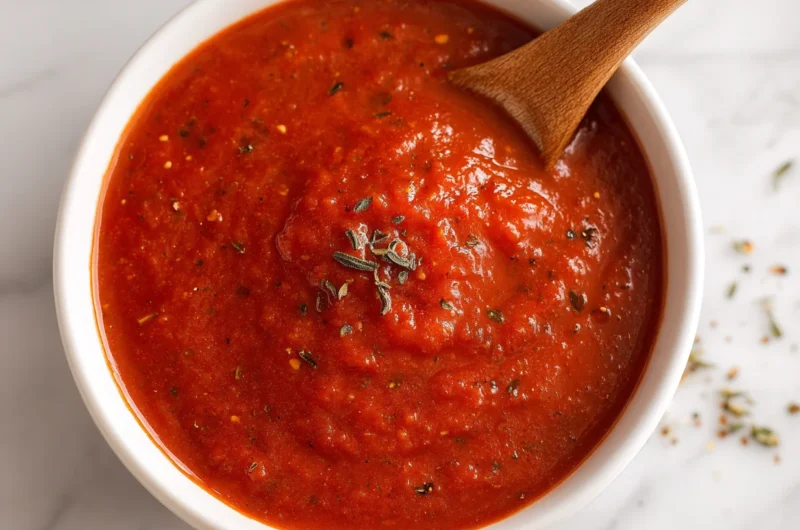
Homemade Pizza Sauce Recipe You’ll Love to Spread
4
servings10
minutes20
minutes70
kcalA premium homemade pizza sauce made with simple, high-quality ingredients. Perfectly balanced in flavor, this rich and aromatic sauce delivers authentic pizzeria-style taste, enhancing every pizza with a thick, smooth, and professional-quality base.
Ingredients
Crushed tomatoes – 2 cups
Tomato paste – 2 tablespoons
Extra virgin olive oil – 2 tablespoons
Fresh garlic (minced) – 4 cloves
Dried oregano – 1 teaspoon
Dried basil – 1 teaspoon
Fine salt – 1 teaspoon
Black pepper – ½ teaspoon
Sugar – 1 teaspoon
Red chili flakes – ½ teaspoon (optional)
Fresh basil – 5–6 leaves (optional)
Onion powder – ½ teaspoon (optional)
Parmesan cheese – 2 tablespoons (optional)
Garlic powder – ½ teaspoon (optional)
Directions
- Heat extra virgin olive oil over medium-low heat and sauté minced garlic until fragrant without browning.
- Add crushed tomatoes and tomato paste, stirring until smooth and fully combined.
- Mix in sugar, salt, black pepper, oregano, and basil evenly.
- Let the sauce simmer uncovered for 15–20 minutes, stirring occasionally to thicken.
- Add optional ingredients if desired, adjust seasoning, and cool before spreading on pizza.
Recipe Video
Notes
- Always use high-quality tomatoes for best results.
- Keep heat low while cooking garlic to avoid bitterness.
- Simmer properly to achieve thick consistency.
- Taste and adjust seasoning before final use.
- Store or freeze in portions for convenience.