
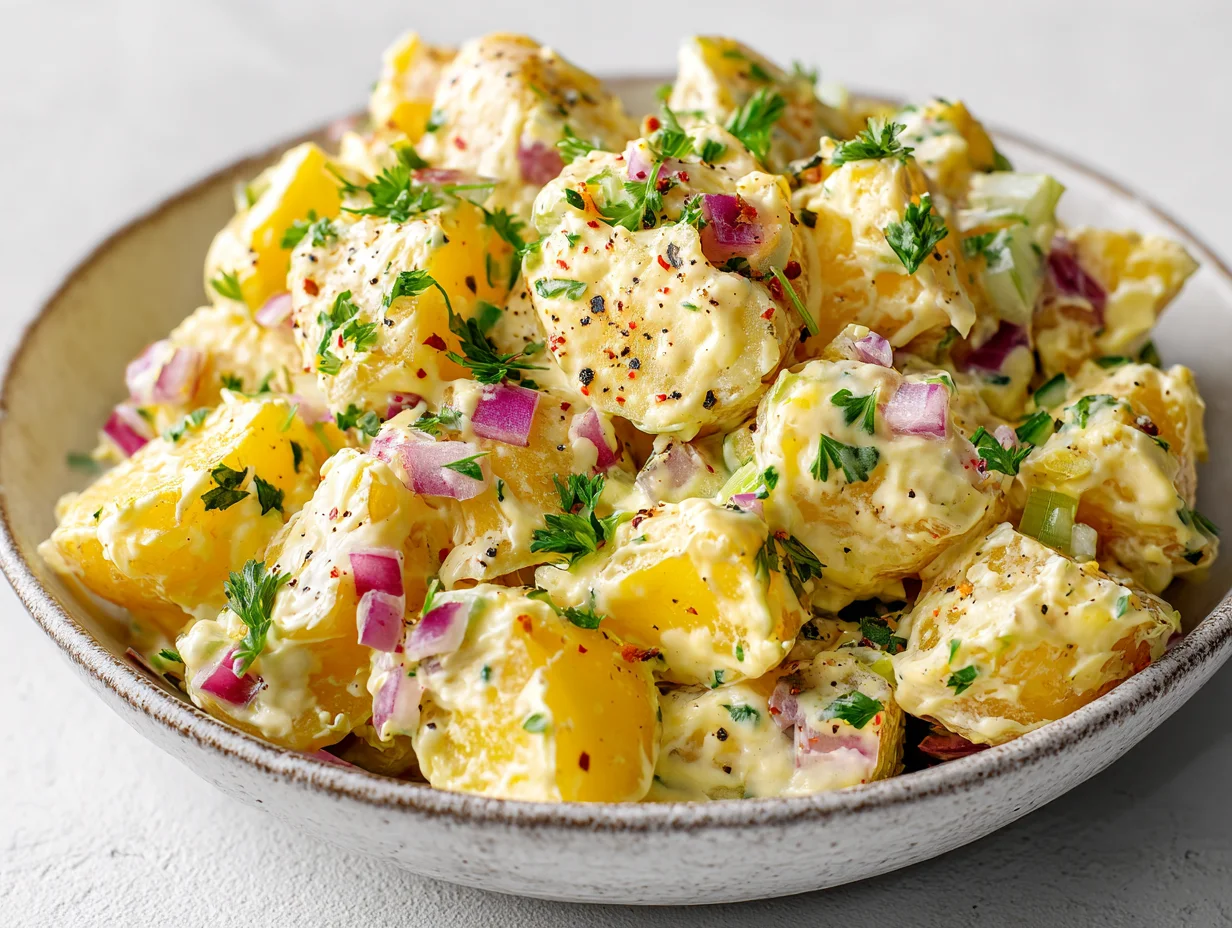
A great potato salad doesn’t need to be complicated, it needs to be precise. This Easy Mustard Potato Salad delivers bold, tangy flavor with a creamy consistency that stands out instantly. It’s the kind of dish that transforms simple ingredients into something deeply satisfying.
What makes this recipe exceptional is its sharp mustard profile balanced with smooth richness. Every bite carries a gentle acidity that cuts through heaviness, making it refreshing yet indulgent. It’s crafted for those who appreciate clean, defined flavors.
From a professional kitchen perspective, this salad is about control, texture, seasoning, and timing. When executed correctly, it holds structure while remaining silky and cohesive, which is the hallmark of a refined potato salad.
Whether you’re preparing for a casual meal or a large gathering, this recipe guarantees consistency, flavor depth, and crowd appeal. It’s simple, but it performs like a signature dish.
Table of Contents
Ingredients You’ll Need
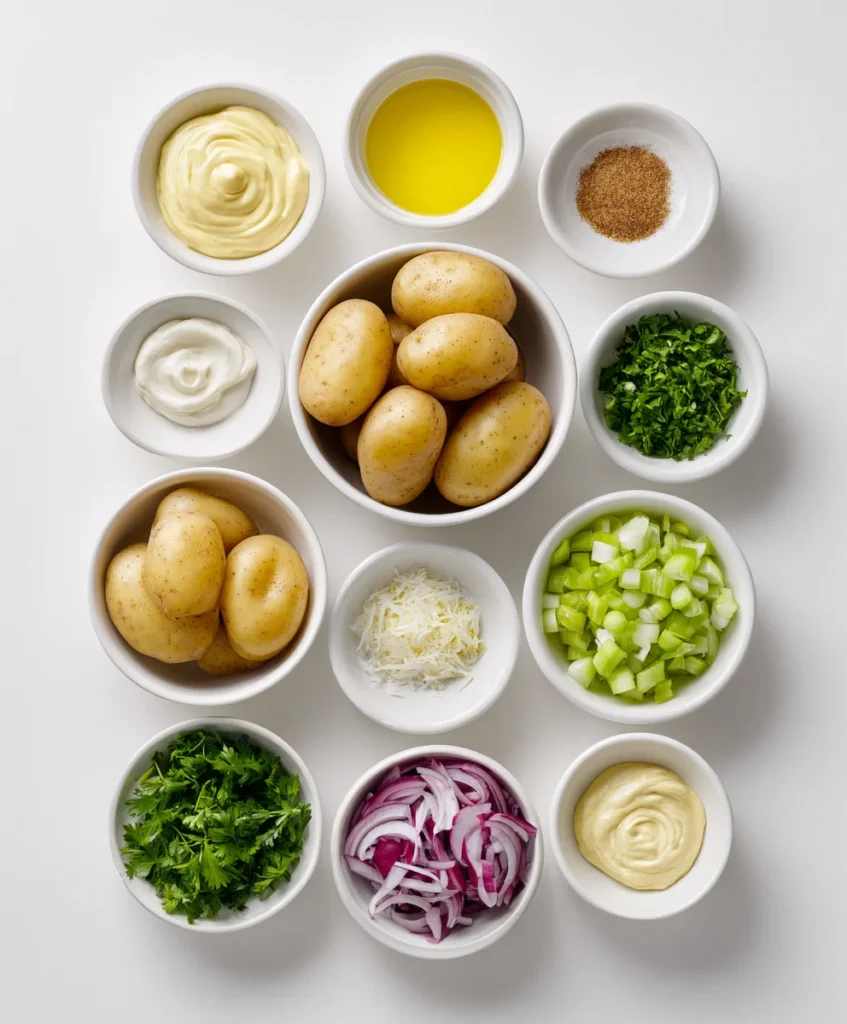
Base Ingredients:
- Potatoes (Yukon Gold) – 2 lbs (900g)*
- Yellow mustard – 3 tbsp (45 g)*
- Mayonnaise – ¾ cup (180 ml)*
- Apple cider vinegar – 1 tbsp (15 ml)*
- Salt – 1 tsp (5 g)*
- Black pepper – ½ tsp (2 g)*
Optional Add-ins:
- Celery (finely chopped) – ½ cup (75 g)*
- Red onion (diced) – ¼ cup (40 g)*
- Fresh parsley – 2 tbsp (10 g)*
- Dijon mustard – 1 tbsp (15 g)*
- Garlic powder – ½ tsp (2 g)*
Step-by-Step Intrusions

Prepare and Cook the Potatoes
Begin by peeling and cutting the potatoes into evenly sized chunks to ensure uniform cooking. Place them into a pot of cold salted water and bring to a gentle boil. Cook until just fork-tender, maintaining structure without softness.
Drain immediately and allow them to steam dry for a few minutes. This step is critical, as excess moisture can dilute the dressing later. Properly cooked potatoes create the foundation of a well-balanced salad with a firm yet creamy bite.
Build the Mustard Dressing Base
In a mixing bowl, combine yellow mustard, mayonnaise, apple cider vinegar, salt, and black pepper. Whisk until smooth and fully emulsified. If desired, add Dijon mustard for a deeper flavor profile. The goal is a dressing that is tangy yet balanced, not overpowering.
This mixture should be thick enough to coat the potatoes evenly while still maintaining a silky texture. Taste and adjust seasoning carefully, ensuring the acidity and richness complement each other.
Combine Ingredients with Precision
While the potatoes are still slightly warm, transfer them into a large mixing bowl. Pour the dressing over and gently fold to coat evenly. Add celery, onion, and parsley if using. Mixing at this stage allows the potatoes to absorb maximum flavor.
Avoid aggressive stirring to maintain chunk integrity. The goal is even distribution without breaking the potatoes. A professional finish depends on preserving both structure and consistency throughout the salad.
Chill and Final Adjustment
Cover the salad and refrigerate for at least two hours to allow flavors to develop fully. Chilling enhances cohesion and improves texture. Before serving, taste again and adjust seasoning if needed.
Sometimes a small addition of mustard or salt can revive the balance. Serve slightly chilled rather than overly cold for the best flavor expression. A final garnish of parsley can elevate presentation and add freshness to the finished dish.
Cook Time
Total: 40 minutes
Prep: 15 minutes
Bake: 25 minutes
Servings
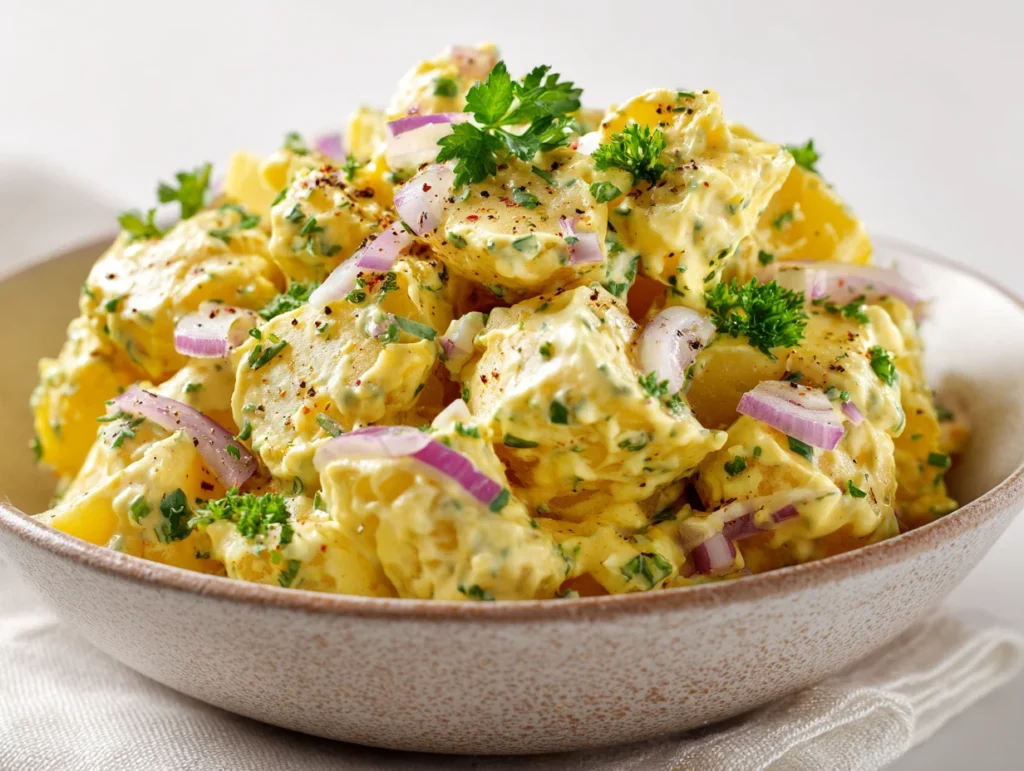
This recipe makes approximately 6 servings, offering generous portions suitable for family meals or small gatherings. Its rich yet balanced profile ensures each serving is satisfying without feeling overly heavy, making it ideal as a dependable side dish.
For larger occasions, the recipe can be scaled without compromising quality. Careful adjustment of seasoning is key when increasing quantities, ensuring the mustard flavor remains balanced and consistent throughout the dish.
Its versatility allows it to complement a wide range of main courses, from grilled meats to lighter vegetarian options. The texture and flavor profile make it a reliable addition to any well-planned menu.
The Overlooked Error That Dulls Flavor
One of the most common mistakes in mustard potato salad is using too much mustard without balancing acidity. This results in a harsh, overpowering taste that masks the natural flavor of the potatoes instead of enhancing them.
Another issue is undercooking or overcooking the potatoes. Undercooked potatoes feel firm and unpleasant, while overcooked ones become mushy, destroying the salad’s structure and visual appeal.
Failing to season properly during cooking is also a critical mistake. Potatoes need salt during boiling to develop internal flavor, not just surface seasoning afterward.
Finally, mixing ingredients when potatoes are completely cold prevents proper absorption of the dressing. This leads to uneven flavor and a less cohesive final dish that lacks depth and refinement.
How to Achieve Perfect Balance Every Time
Start by controlling mustard intensity. Use measured amounts and balance with mayonnaise and vinegar to create harmony. Taste continuously to ensure no single element dominates the flavor profile.
Cook potatoes until just tender and monitor closely. This ensures they maintain their shape while still being soft enough to absorb dressing effectively, delivering the ideal texture.
Season the water generously when boiling potatoes. This step builds flavor from within, ensuring every bite is well-seasoned rather than relying solely on the dressing.
Always mix while the potatoes are slightly warm. This technique allows better absorption, resulting in a more flavorful, cohesive salad that reflects professional-level preparation.
Nutritional Information (approx. per serving)
- Calories: 280 kcal
- Protein: 5 g
- Carbohydrates: 30 g
- Fat: 16 g
- Fiber: 3 g
- Sodium: 390 mg
This salad provides a steady source of energy due to its carbohydrate content, making it suitable for active lifestyles. The balance of fats and carbs ensures lasting satiety without excessive heaviness.
Mustard contributes antioxidants and enhances digestion, adding subtle health value beyond flavor. Its natural sharpness also helps reduce the need for excessive salt.
The inclusion of fresh vegetables like celery and parsley introduces lightness and micronutrients, improving overall nutritional balance.
When prepared thoughtfully, this dish offers both comfort and nourishment, making it a practical addition to a balanced diet.
Storage Instructions
Store the potato salad in an airtight container in the refrigerator immediately after preparation. Proper sealing preserves freshness and prevents absorption of external odors.
Consume within 3 days for best quality. While it remains safe slightly longer, the texture and flavor are optimal within this timeframe.
Avoid leaving the salad at room temperature for extended periods, especially in warm conditions, to maintain food safety and quality.
Before serving leftovers, stir gently and adjust seasoning if necessary. A small addition of dressing can help restore its original creamy consistency.
Suggestions
For a more refined flavor, use a mix of yellow and Dijon mustard. This creates depth and complexity without overwhelming the dish.
Add a touch of honey for a subtle sweetness that balances acidity. This variation works particularly well for those who prefer a smoother flavor profile.
Serve alongside grilled or roasted dishes to complement smoky flavors. The tanginess of the salad enhances the overall dining experience.
For a lighter version, replace part of the mayonnaise with yogurt. This reduces richness while maintaining a creamy texture and balanced taste.
Seasonal Relevance
This salad is ideal for summer, offering a refreshing and tangy side dish that pairs well with outdoor meals and barbecues.
In spring, its light yet flavorful profile complements fresh produce and seasonal dishes, making it a versatile addition to menus.
During autumn, it serves as a balanced side to heavier meals, cutting through richness with its acidity and clean flavor.
Even in winter, it provides a comforting yet vibrant option, adding contrast to warm and hearty dishes.
Finl Words
A well-made mustard potato salad is about precision, not complexity. When each element is handled correctly, the result is a dish that feels both simple and expertly crafted.
This recipe emphasizes balance, between acidity and richness, softness and structure, tradition and refinement. It’s a reliable formula for consistent results.
By mastering the techniques outlined here, you elevate a basic side dish into something memorable and professional.
Once perfected, this salad becomes more than a recipe, it becomes a signature you can confidently serve on any occasion.
Frequently Asked Questions
Can I use whole grain mustard instead of yellow mustard?
Yes, whole grain mustard can be used for a more textured and slightly milder flavor. It adds visual appeal and complexity, but you may need to adjust quantities to maintain balance and avoid overpowering the dish.
Is it possible to make this salad without mayonnaise?
Yes, you can substitute mayonnaise with Greek yogurt or a vinaigrette-style dressing. This creates a lighter version while still maintaining flavor, though the texture will be less creamy compared to the traditional preparation.
How do I keep the potatoes from absorbing too much dressing?
Allow the potatoes to cool slightly before mixing, but not completely cold. This ensures controlled absorption. Also, avoid overly thin dressing, as thicker consistency helps coat the potatoes without oversaturating them.

Easy Mustard Potato Salad Recipe
6
servings15
minutes25
minutes280
kcalA tangy and creamy mustard potato salad made with tender potatoes and a perfectly balanced dressing. This easy recipe delivers bold flavor, smooth texture, and is ideal for barbecues, family meals, and quick side dish preparations.
Ingredients
Potatoes (Yukon Gold) – 2 lbs (900g)*
Yellow mustard – 3 tbsp (45 g)*
Mayonnaise – ¾ cup (180 ml)*
Apple cider vinegar – 1 tbsp (15 ml)*
Salt – 1 tsp (5 g)*
Black pepper – ½ tsp (2 g)*
Optional Add-ins:
Celery (finely chopped) – ½ cup (75 g)*
Red onion (diced) – ¼ cup (40 g)*
Fresh parsley – 2 tbsp (10 g)*
Dijon mustard – 1 tbsp (15 g)*
Garlic powder – ½ tsp (2 g)*
Directions
- Peel and cut potatoes into even chunks, then boil in salted water until fork-tender. Drain and let them slightly cool.
- In a bowl, whisk together mustard, mayonnaise, vinegar, salt, and pepper until smooth.
- Transfer warm potatoes to a mixing bowl and gently fold in the dressing.
- Add celery, onion, parsley, Dijon mustard, and garlic powder. Mix carefully.
- Taste and adjust seasoning if needed.
- Chill for at least 2 hours before serving for best flavor.
Recipe Video
Notes
- Use slightly warm potatoes for better flavor absorption.
- Avoid overcooking potatoes to maintain texture.
- Adjust mustard quantity to control tanginess.
- Chill before serving to enhance taste.
- Mix gently to prevent breaking the potatoes.