
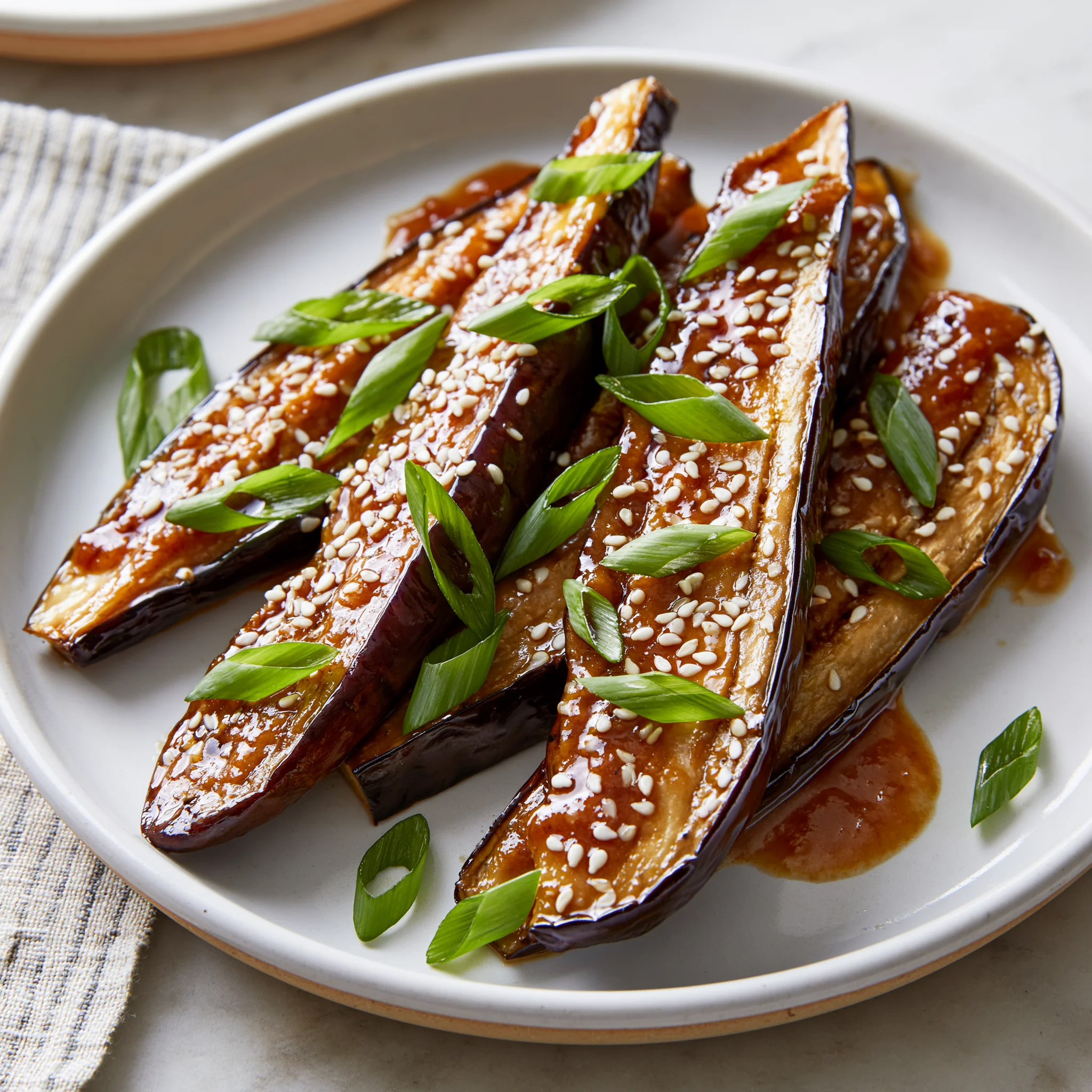
There are vegetable dishes that accompany a meal, and then there are dishes that define the meal itself. Miso-glazed eggplant belongs firmly in the second category, where deep umami flavor, caramelized edges, and silky texture come together in perfect harmony.
This Crispy Miso Glazed Eggplant Recipe with Sesame and Scallions is rooted in Japanese-inspired technique, designed to transform a simple vegetable into a restaurant-level centerpiece. The glaze creates a rich, savory-sweet coating that enhances every bite.
What makes this dish exceptional is its contrast of textures. The eggplant becomes tender and creamy inside while the surface turns lightly crisp and deeply flavorful from the miso caramelization process.
As a chef, I value recipes like this because they elevate humble ingredients. With precise heat control and proper glazing technique, eggplant becomes a refined, umami-rich experience suitable for both modern dining and plant-based menus.
Table of Contents
Ingredients You’ll Need
Base Ingredients:
- Eggplant (medium-sized) – 2 pieces
- White miso paste – 3 tbsp
- Soy sauce – 1 tbsp
- Honey or maple syrup – 1 tbsp
- Rice vinegar – 1 tbsp
- Sesame oil – 1 tbsp
- Garlic (minced) – 2 cloves
- Ginger (grated) – 1 tsp
- Olive oil – 2 tbsp
- Salt – ½ tsp
- Black pepper – ¼ tsp
- Water – 2 tbsp
Optional Add-ins:
- Sesame seeds – 1 tbsp
- Scallions (sliced) – 2 tbsp
- Chili flakes – 1 tsp
- Cilantro – 1 tbsp
- Toasted nuts – 2 tbsp
- Lime juice – 1 tbsp
- Chili oil – 1 tsp
Step-by-Step Intrusions
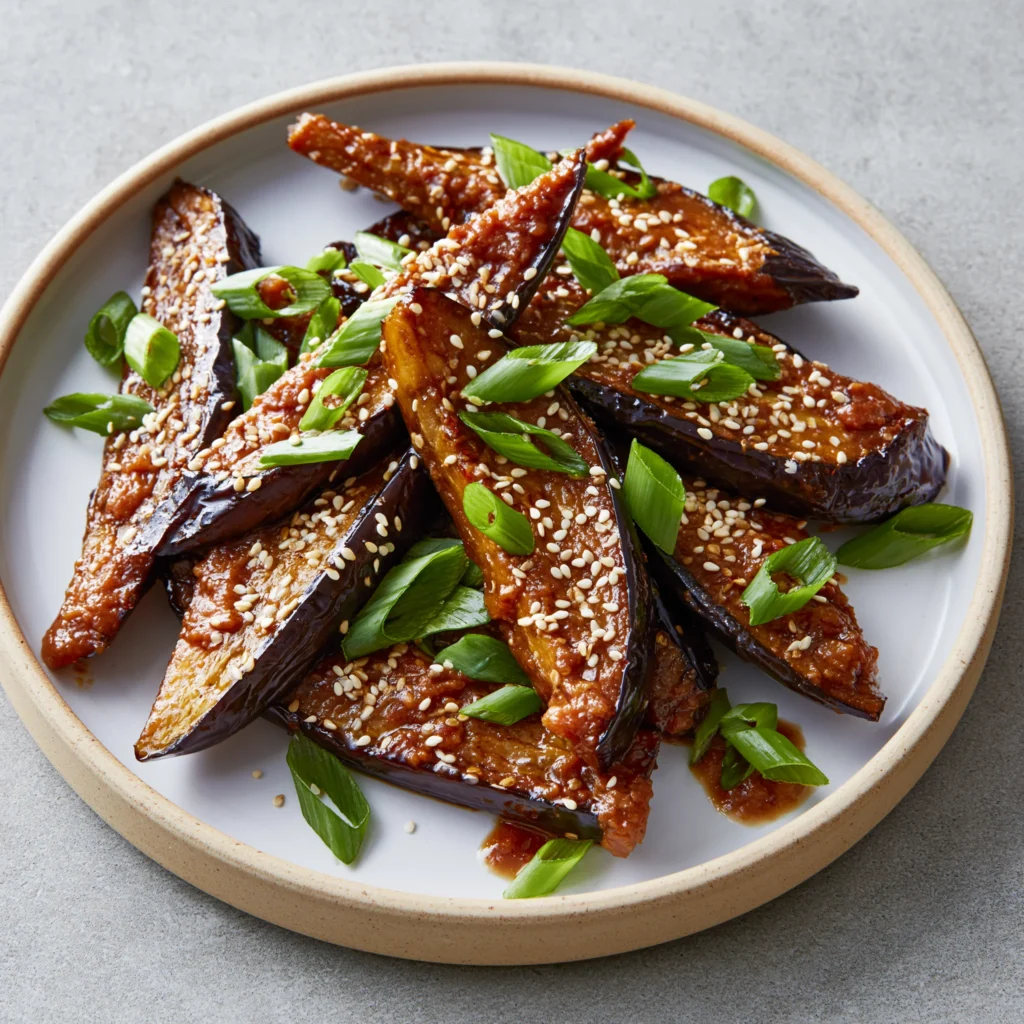
1. Prepare and Slice the Eggplant
Wash eggplants thoroughly and slice them lengthwise or into thick rounds depending on presentation preference. Uniform slicing ensures even cooking and consistent texture throughout.
Lightly score the flesh side in a crisscross pattern. This allows the miso glaze to penetrate deeper and helps the eggplant absorb flavor while roasting evenly.
2. Pre-Cook for Texture Control
Brush eggplant slices with olive oil and place them on a heated pan or baking tray. Cook until the surface begins to soften and lightly brown.
This step removes excess moisture from the eggplant, preventing sogginess and ensuring a firm yet creamy interior once glazed and finished.
3. Prepare the Miso Glaze
In a small bowl, mix miso paste, soy sauce, honey, rice vinegar, sesame oil, garlic, ginger, and water until smooth and glossy.
The glaze should be thick but spreadable. Balance is essential here, as it defines the final umami depth and caramelized finish of the dish.
4. Glaze and Finish Cooking
Brush the miso mixture generously over partially cooked eggplant. Place back in oven or pan until edges caramelize and become slightly crisp.
Finish with sesame seeds and scallions for freshness and texture contrast before serving hot for best flavor impact.
Cook Time
Total: 30 minutes
Prep: 10 minutes
Bake: 20 minutes
Servings
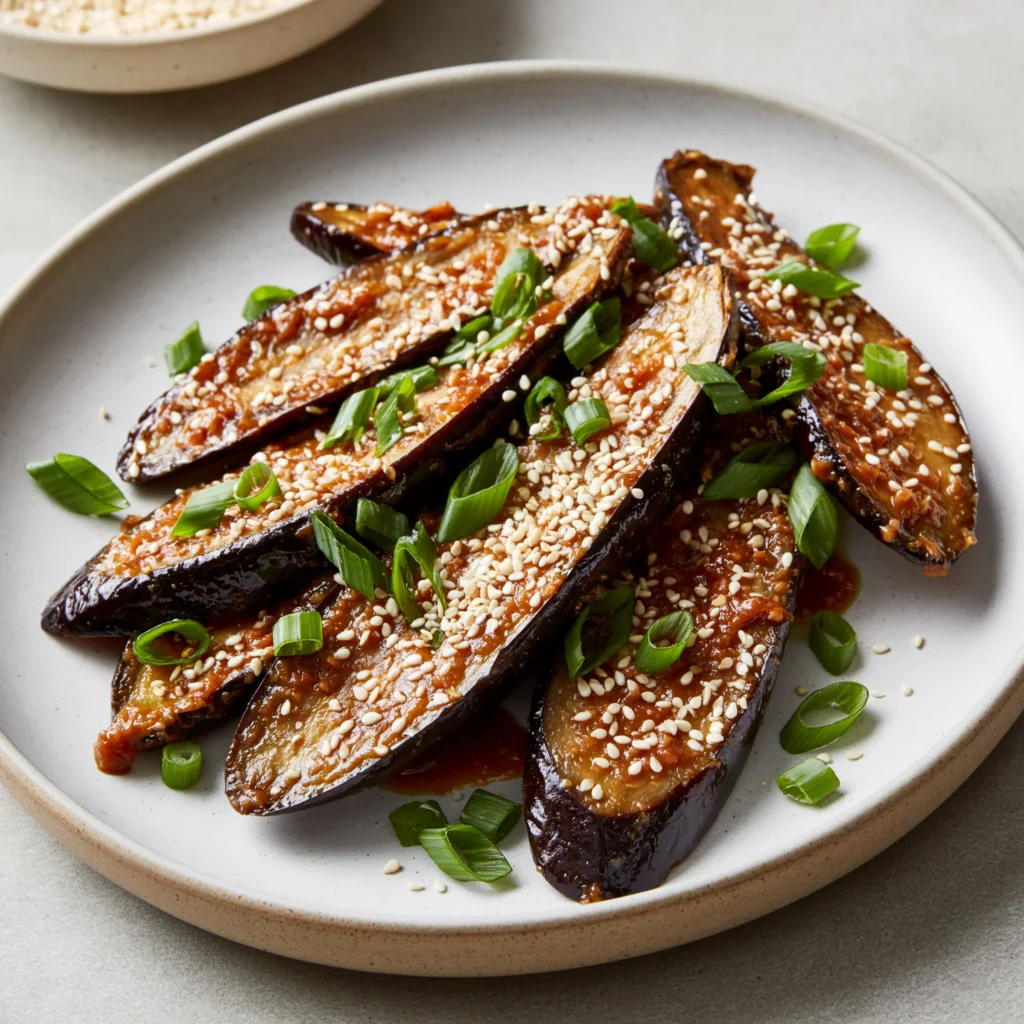
This recipe serves approximately 2 to 3 people as a side dish or light main course, depending on portion size and accompanying dishes.
Each serving delivers a balance of umami richness and natural vegetable sweetness, making it ideal for both plant-based meals and fusion-style dining experiences.
For larger meals, the recipe can be doubled easily while maintaining the same cooking technique and glaze consistency.
Makes approximately 2–3 servings of miso-glazed eggplant.
Common Mistakes in Miso-Glazed Eggplant That Affect Flavor and Texture
One common mistake is skipping the pre-cooking step. Raw eggplant releases too much moisture, which prevents proper caramelization of the miso glaze.
Another issue is using too much glaze at once. Overloading causes the sauce to burn instead of caramelize, leading to a bitter taste rather than a balanced umami profile.
Many cooks also slice eggplant unevenly. Inconsistent thickness results in uneven cooking, where some pieces become mushy while others remain undercooked.
Incorrect heat control is another problem. High heat can burn the glaze quickly, while low heat fails to develop the signature crispy edges.
Smart Solutions for Perfect Miso Eggplant Every Time
Always pre-cook eggplant lightly to reduce moisture and ensure a firm texture before glazing.
Apply the miso glaze in thin, even layers so it caramelizes properly without burning or becoming overly sticky.
Maintain uniform slicing so each piece cooks evenly and achieves the same creamy-soft interior.
Use medium heat during final cooking to allow gradual caramelization and balanced flavor development.
Nutritional Information (approx. per serving)
- Calories – 210 kcal
- Protein – 5 g
- Carbohydrates – 18 g
- Fat – 12 g
- Fiber – 6 g
- Sodium – 480 mg
This dish is rich in antioxidants from eggplant, supporting overall cellular health and digestion.
Miso provides fermented nutrients that contribute to gut-friendly benefits and improved flavor depth.
Healthy fats from sesame and olive oil help enhance satiety and nutrient absorption.
Low calorie density makes it suitable for balanced diets and light meal planning.
Storage Instructions
Allow eggplant to cool completely before storing to prevent moisture buildup and texture loss.
Refrigerate in an airtight container for up to 2–3 days while maintaining flavor integrity.
Reheat gently in a pan or oven to restore slight crispness and glaze texture.
Avoid freezing, as eggplant texture may become overly soft and watery after thawing.
Suggestions
Serve with steamed rice or noodles to turn this dish into a complete meal experience.
Add chili oil or flakes for a spicier variation with deeper heat complexity.
Pair with tofu or grilled vegetables for a fully plant-based balanced plate.
Finish with fresh lime juice for brightness and flavor contrast enhancement.
Seasonal Relevance
Eggplant is widely available in warmer months, making this dish ideal for summer and early autumn cooking.
In summer, its light texture and umami glaze pair well with fresh salads and chilled sides.
During cooler months, it works as a warm, comforting side dish alongside rice or protein mains.
Its adaptability makes it suitable year-round across different cuisines and meal styles.
Finl Words
Crispy miso-glazed eggplant is a perfect example of how simple ingredients can deliver complex flavor when treated with care.
The key lies in balance, moisture control, glaze precision, and controlled heat application.
When executed properly, this dish transforms eggplant into a deeply satisfying umami-rich experience.
It stands as a modern essential for both plant-based and fusion-style cooking.
Frequently Asked Questions
Can I make miso-glazed eggplant without oven baking?
Yes, you can cook it entirely on a stovetop using a covered pan. Cook eggplant until soft, then apply glaze and caramelize on low heat. Oven baking, however, provides more even browning and better texture control for professional results.
Which type of eggplant works best for this recipe?
Medium-sized globe eggplants or Japanese eggplants work best. They have fewer seeds and a smoother texture, which allows better absorption of the miso glaze. Smaller varieties also cook faster and develop a creamier interior.
Can I make this recipe vegan?
Yes, simply replace honey with maple syrup or agave nectar. The rest of the ingredients are already plant-based. This keeps the glaze balanced while maintaining the signature sweet-savory miso flavor without any animal-derived ingredients.
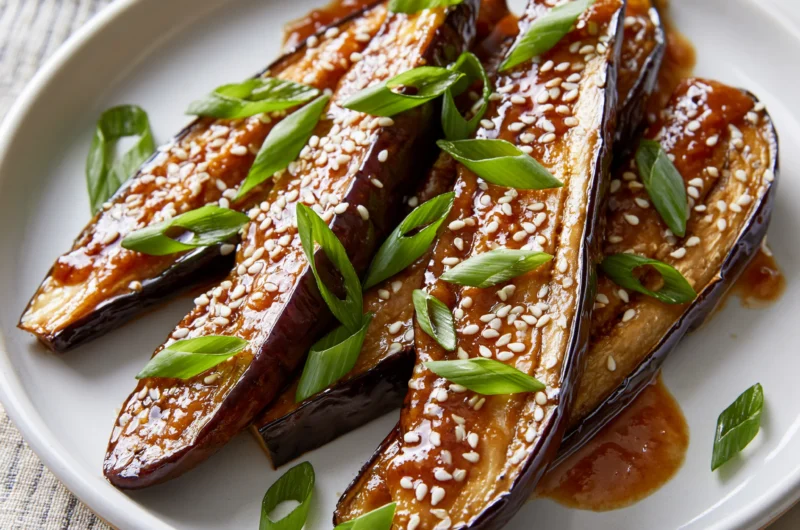
Crispy Miso Glazed Eggplant Recipe with Sesame and Scallions
10
minutes20
minutes210
kcalA flavorful Crispy Miso Glazed Eggplant dish made with tender roasted eggplant coated in a rich miso glaze and finished with sesame and scallions. This umami-packed recipe delivers a perfect balance of sweet, savory, and smoky flavors in every bite.
Ingredients
Eggplant (medium-sized) – 2 pieces
White miso paste – 3 tbsp
Soy sauce – 1 tbsp
Honey or maple syrup – 1 tbsp
Rice vinegar – 1 tbsp
Sesame oil – 1 tbsp
Garlic (minced) – 2 cloves
Ginger (grated) – 1 tsp
Olive oil – 2 tbsp
Salt – ½ tsp
Black pepper – ¼ tsp
Water – 2 tbsp
Optional Add-ins:
Sesame seeds – 1 tbsp
Scallions (sliced) – 2 tbsp
Chili flakes – 1 tsp
Cilantro – 1 tbsp
Toasted nuts – 2 tbsp
Lime juice – 1 tbsp
Chili oil – 1 tsp
Directions
- Slice eggplant and lightly score the surface. Brush with olive oil and cook until slightly tender. In a bowl, mix miso paste, soy sauce, honey, vinegar, sesame oil, garlic, ginger, and water to form a smooth glaze. Brush glaze over eggplant and bake or pan-cook until caramelized and slightly crispy. Finish with sesame seeds and scallions. Serve hot for best flavor and texture.
Recipe Video
Notes
- Do not skip pre-cooking eggplant for best texture
- Apply glaze in thin layers to avoid burning
- Use medium heat for proper caramelization
- Japanese eggplant gives softer, creamier results
- Best served fresh while glaze is glossy and warm