
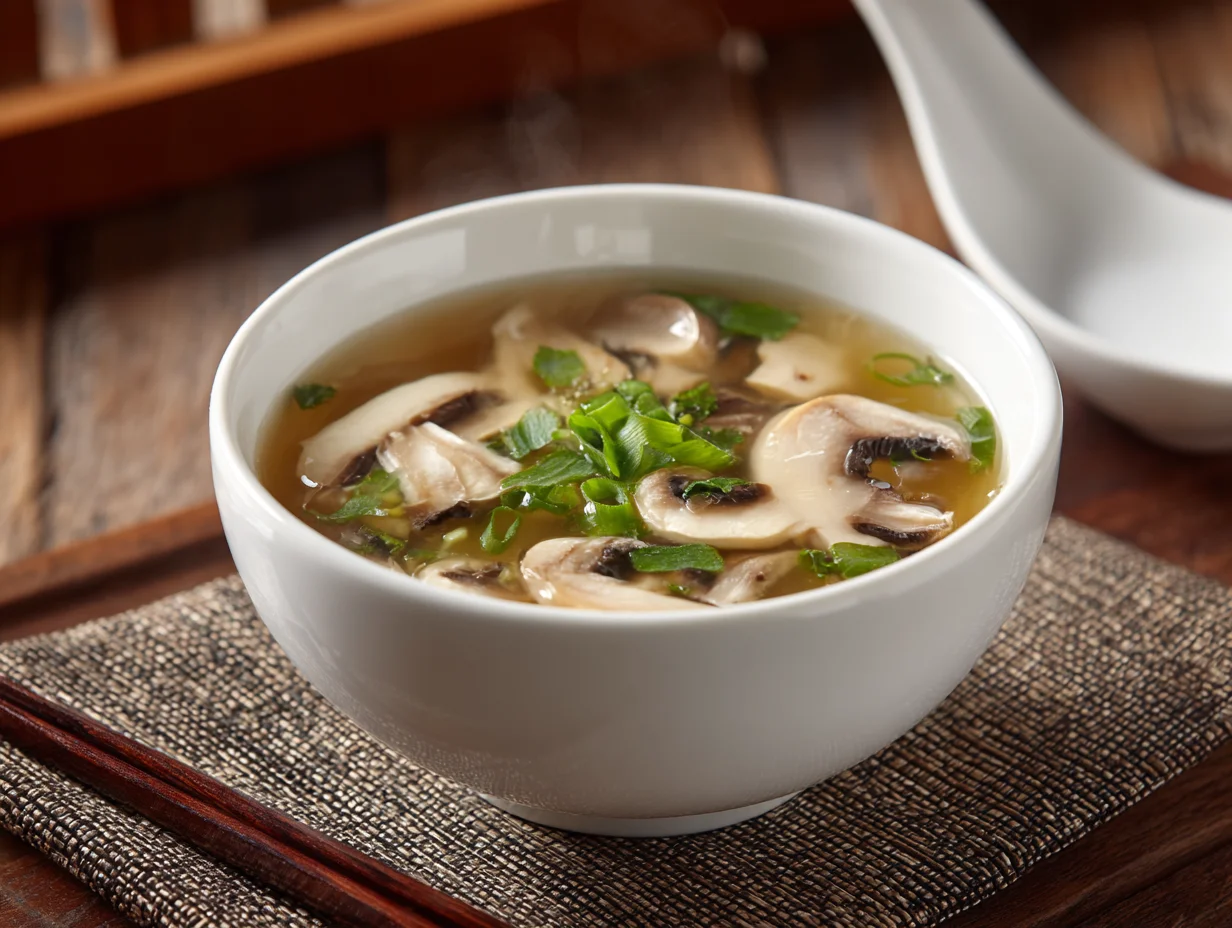
There are soups that simply warm the body, and then there are soups that calm the mind. Japanese mushroom soup belongs to the second category, delivering deep umami richness, delicate aroma, and a clean, refined finish that defines traditional Japanese comfort cooking.
As a professional chef, I focus on balance rather than intensity. This soup is built on subtle layers, mushrooms, dashi-style depth, and light seasoning—creating a clear broth that feels both nourishing and elegant without being heavy.
What makes this recipe special is its umami structure. Mushrooms naturally release savory compounds when simmered gently, forming a broth that tastes complex yet incredibly clean, ideal for both starters and light meals.
If you are looking for a restaurant-style Japanese soup that is simple, healthy, and deeply satisfying, this recipe brings authentic flavor with minimal ingredients and precise technique.
Table of Contents
Ingredients You’ll Need
Base Ingredients:
- Mushrooms (shiitake or button, sliced) – 250g
- Vegetable or dashi stock – 4 cups
- Soy sauce – 2 tablespoons
- Garlic (minced) – 2 cloves
- Ginger (grated) – 1 teaspoon
Optional Add-ins:
- Spring onions (chopped) – 2 tablespoons
- Sesame oil – 1 teaspoon
- Tofu (cubed) – 100g
- Seaweed (wakame) – 1 tablespoon
- Black pepper – ½ teaspoon
Step-by-Step Intrusions
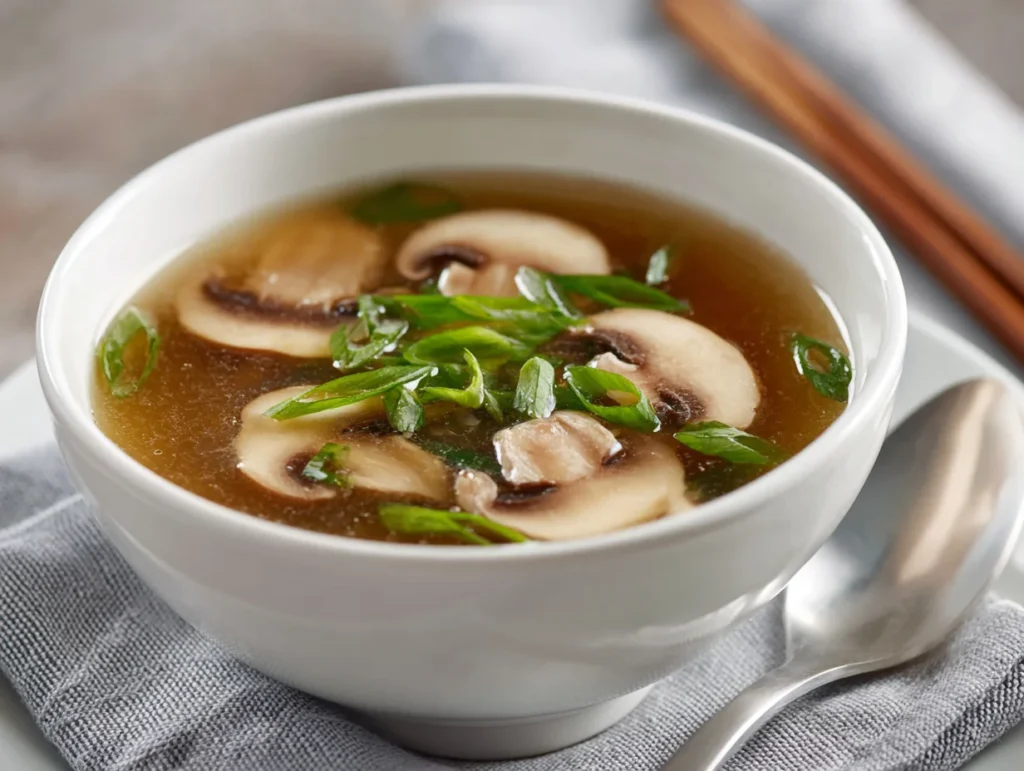
Step 1: Build the Aromatic Base
Start by heating a pot on medium flame and adding a small amount of sesame oil for aroma.
Add minced garlic and grated ginger, sautéing gently until fragrant but not browned.
This step creates the foundation of the soup’s depth.
Avoid high heat, as burning garlic will create bitterness.
The goal is a light aromatic base that enhances the natural mushroom flavor without overpowering it.
Step 2: Develop the Mushroom Umami
Add sliced mushrooms directly into the aromatic base and stir gently.
Cook for a few minutes until they begin to release moisture and soften.
This is where the flavor builds naturally.
Mushrooms should not be rushed; slow cooking allows umami compounds to develop fully.
Stir occasionally to ensure even cooking and flavor absorption.
Step 3: Simmer the Broth Gently
Pour in vegetable or dashi stock and bring it to a gentle simmer.
Avoid boiling too aggressively, as clarity and flavor balance are key.
Add soy sauce gradually to adjust saltiness and depth.
Let the soup simmer so mushrooms fully infuse the broth.
This slow extraction creates a clean yet deeply savory soup base.
Step 4: Final Flavor Balancing
Now add optional tofu or seaweed for texture and nutrition.
Simmer for a few more minutes until everything is well integrated.
Taste and adjust seasoning if needed.
Finish with a light drizzle of sesame oil for aroma.
Serve hot, topped with spring onions for freshness and visual appeal.
Cook Time
Total: 30 minutes
Prep: 10 minutes
Bake: 20 minutes
Servings
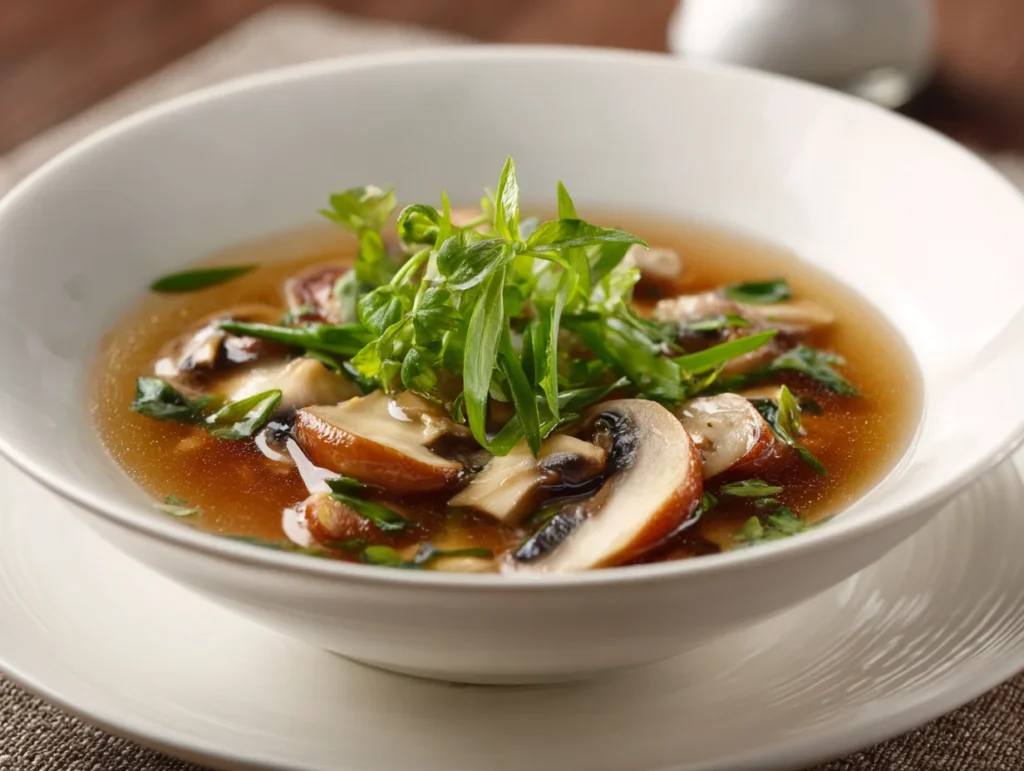
This recipe serves approximately 3–4 people, making it ideal for light meals, starters, or wellness-focused dining. Each bowl delivers a balanced umami profile that feels both comforting and clean on the palate.
It works perfectly as an appetizer in a Japanese-inspired meal or as a standalone light dish. The portion size is designed to provide satisfaction without heaviness, making it suitable for any time of day.
For larger servings, the recipe can be easily scaled up while maintaining the same broth-to-mushroom balance, ensuring consistent flavor and texture across all portions.
Makes approximately 3–4 servings
Common Flavor Mistakes in Mushroom Soup
One of the most common mistakes is overcooking mushrooms at high heat. This destroys their delicate texture and reduces their natural umami potential, resulting in a flat-tasting soup.
Another issue is using too much soy sauce early in the cooking process. This can overpower the broth and mask the subtle mushroom flavor that defines Japanese-style soups.
Boiling the soup aggressively is also a frequent error. High heat makes the broth cloudy and disrupts the clean, refined character expected in this dish.
Skipping aromatics like ginger and garlic reduces depth significantly, leading to a simple broth rather than a layered, restaurant-quality soup experience.
Chef Techniques for Perfect Balance
Always sauté aromatics gently to release flavor without bitterness. Low heat ensures a clean and fragrant base that supports the mushrooms.
Allow mushrooms to cook slowly so they release natural umami compounds. This step is essential for building depth in the broth.
Maintain a gentle simmer instead of a rolling boil. This preserves clarity and ensures a smooth, refined texture in the final soup.
Adjust seasoning gradually at the end. This allows full control over saltiness and keeps the broth balanced and delicate.
Nutritional Information (approx. per serving)
- Calories – 90 kcal
- Carbohydrates – 8g
- Protein – 6g
- Fat – 4g
- Fiber – 2g
- Sodium – 600mg
Mushrooms are naturally rich in antioxidants and support immune health while being low in calories, making this soup a light yet nourishing choice.
The broth-based structure supports hydration and digestion, making it ideal for wellness-focused diets or light meals.
Ginger and garlic contribute anti-inflammatory properties and add natural warmth to the dish.
Overall, this soup provides balanced nutrition without heaviness, making it suitable for daily consumption.
Storage Instructions
Store leftover mushroom soup in an airtight container and refrigerate once completely cooled. This helps preserve freshness and flavor integrity.
Do not leave the soup at room temperature for long periods, as broth-based dishes are sensitive to bacterial growth.
When reheating, use low heat to maintain texture and avoid overcooking mushrooms further. Gentle reheating preserves quality.
Consume within 2 days for best flavor, as mushrooms tend to lose texture and depth over extended storage.
Suggestions
For deeper flavor, add a small piece of kombu while simmering the broth. It enhances natural umami without overpowering the soup.
You can also add noodles to transform this into a light meal. Udon or soba works especially well with the broth.
A few drops of chili oil can add gentle heat for those who prefer a spicier profile without altering authenticity.
Serve in warm bowls to maintain temperature and enhance the overall dining experience.
Seasonal Relevance
This soup is especially popular during colder months when warm, light meals are preferred. Its gentle warmth provides comfort without heaviness.
Mushrooms are widely available year-round, making this recipe practical and accessible in all seasons.
In spring and autumn, its clean profile makes it ideal for balanced seasonal eating and wellness-focused diets.
During winter, it serves as a soothing starter that prepares the palate for heavier meals while keeping digestion light.
Finl Words
Japanese mushroom soup represents simplicity executed with precision. Every ingredient plays a defined role, contributing to a balanced and refined flavor profile.
As a chef, I value restraint in recipes like this. The goal is not complexity but clarity and harmony in every spoonful.
This soup is versatile, healthy, and adaptable, making it suitable for both everyday cooking and elegant dining experiences.
When prepared correctly, it delivers a calming, umami-rich experience that reflects true Japanese culinary philosophy.
Frequently Asked Questions
Can I use mixed mushrooms instead of shiitake only?
Yes, you can use a mix of mushrooms like button, oyster, and shiitake. Each variety adds different texture and depth, enhancing overall umami. Just ensure even slicing for consistent cooking and balanced flavor distribution throughout the soup.
Is dashi necessary for authentic flavor?
Dashi is recommended for traditional Japanese taste, but vegetable stock works as a substitute. Dashi enhances umami depth significantly, while vegetable stock provides a lighter, more neutral base suitable for vegetarian versions of the soup.
Can I make this soup ahead of time?
Yes, it can be prepared in advance and stored in the refrigerator. However, mushrooms may soften slightly over time. Reheat gently on low heat to preserve flavor and avoid overcooking the ingredients further.
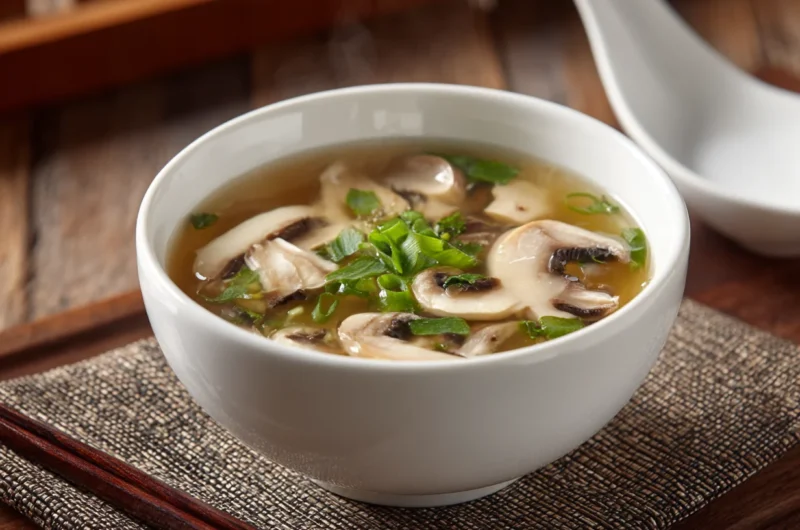
Savory Japanese Mushroom Soup Recipe
4
servings10
minutes20
minutes90
kcalA light and savory Japanese mushroom soup made with tender mushrooms, aromatic ginger, and umami-rich broth. This comforting soup delivers clean flavors, delicate texture, and authentic Japanese taste perfect for starters or healthy light meals.
Ingredients
Mushrooms (shiitake or button, sliced) – 250g
Vegetable or dashi stock – 4 cups
Soy sauce – 2 tablespoons
Garlic (minced) – 2 cloves
Ginger (grated) – 1 teaspoon
Optional Add-ins:
Spring onions (chopped) – 2 tablespoons
Sesame oil – 1 teaspoon
Tofu (cubed) – 100g
Seaweed (wakame) – 1 tablespoon
Black pepper – ½ teaspoon
Directions
- Heat sesame oil in a pot and sauté garlic and ginger until fragrant.
- Add sliced mushrooms and cook until softened and slightly golden.
- Pour in vegetable or dashi stock and bring to a gentle simmer.
- Add soy sauce and stir to combine flavors evenly.
- Add tofu and seaweed, then simmer for 5–7 minutes.
- Adjust seasoning with black pepper if needed.
- Turn off heat and let flavors settle for a minute.
- Garnish with spring onions and serve hot.
Recipe Video
Notes
- Do not overcook mushrooms to preserve texture and umami.
- Keep simmer gentle for a clear, clean broth.
- Adjust soy sauce gradually to control saltiness.
- Fresh ginger enhances aroma and depth significantly.
- Best served immediately while hot and fragrant.