

Coconut curry chicken is a high-impact comfort dish designed to deliver restaurant-level depth using simple pantry ingredients. It combines aromatic spices, tender chicken, and rich coconut milk into a smooth, well-balanced curry with consistent flavor in every bite.
What makes this recipe especially valuable is its structured cooking method, where spices are carefully bloomed and layered to build a strong flavor foundation. This controlled technique enhances aroma, color, and overall sauce complexity without requiring advanced culinary skills.
From a professional cooking perspective, this dish focuses on precision simmering and emulsification, ensuring the coconut sauce remains stable, creamy, and deeply infused with spice. The result is a dependable, repeatable curry with premium taste quality.
Whether used for weekly meal prep or a special dinner, coconut curry chicken offers high nutritional value, strong flavor density, and excellent versatility for modern home cooking.
Table of Contents
Ingredients You’ll Need
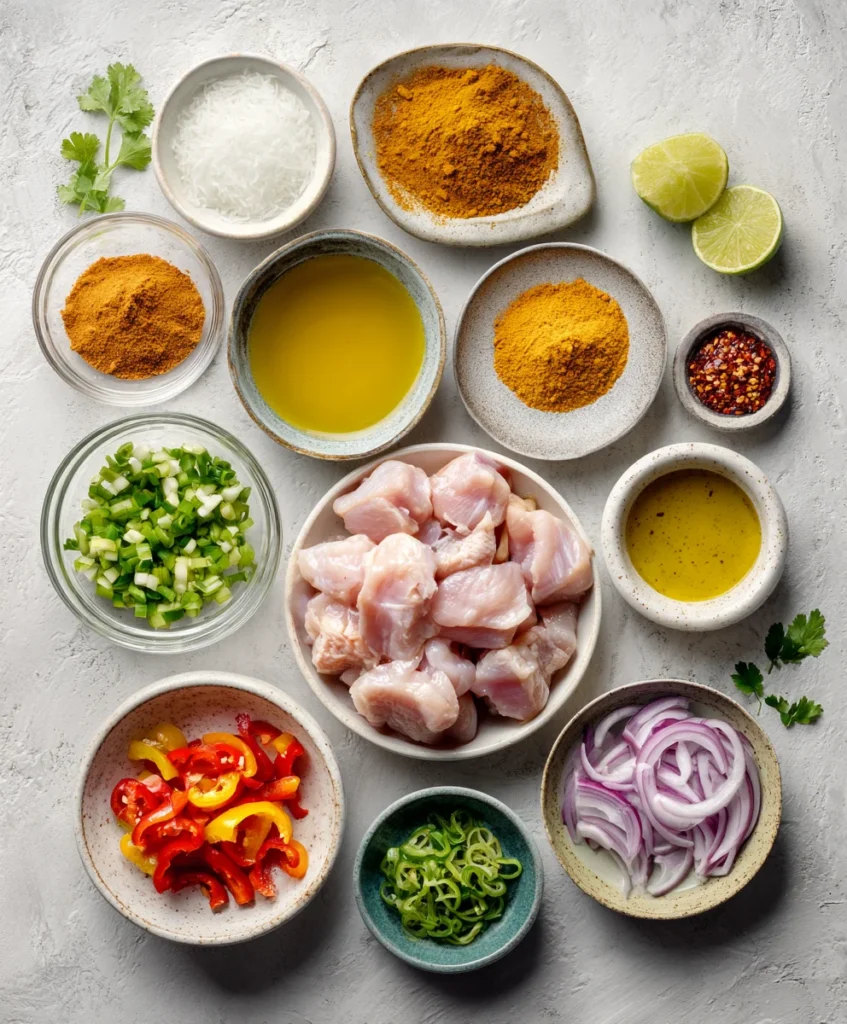
Base Ingredients:
- 500g chicken thigh or breast (boneless, medium pieces)
- 2 tbsp cooking oil (neutral or olive oil)
- 1 medium onion (finely sliced)
- 3 garlic cloves (minced)
- 1 tbsp ginger paste
- 400ml full-fat coconut milk
- 2 tbsp curry powder
- 1 tsp turmeric powder
- 1 tsp paprika
- 1 tsp salt (adjust to taste)
- ½ tsp black pepper
- ½ cup chicken stock or water
Optional Add-ins:
- 1 tbsp fresh coriander (finely chopped)
- 1–2 green chilies (for heat intensity)
- ½ cup bell peppers (added nutrition and texture)
- 1 tbsp lime juice (for acidity balance)
- ½ tsp chili flakes (enhanced spice profile)
Step-by-Step Intrusions
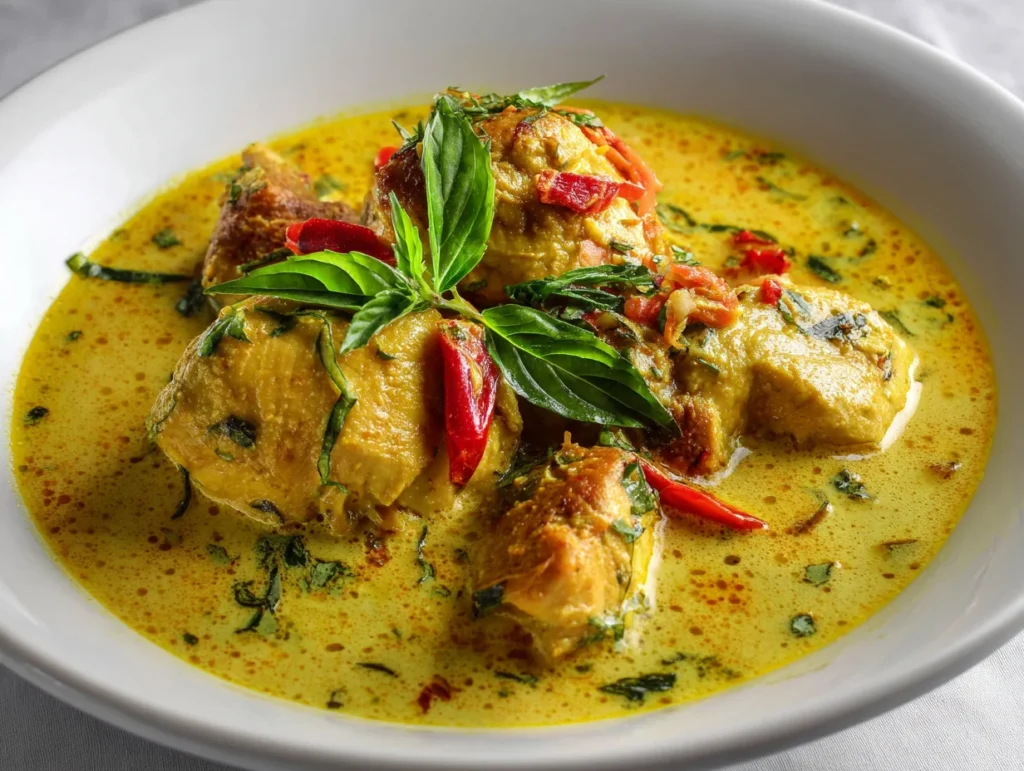
Step 1: Building a Flavor-Intensive Aromatic Base
Heat oil in a heavy-bottom pan over medium heat to ensure even temperature distribution. Add onions and cook slowly until golden brown, allowing natural sugars to develop for deeper flavor complexity. Add garlic and ginger paste and sauté until fragrant.
This step creates the foundational aroma profile of the curry. Proper heat control is essential to avoid burning, as it directly affects taste quality. A well-developed base ensures long-lasting flavor infusion throughout the dish.
Step 2: Professional Spice Activation (Blooming Technique)
Add curry powder, turmeric, paprika, salt, and black pepper directly into the aromatic base. Stir continuously over medium heat to bloom spices in oil.
This technique releases essential oils, intensifying both aroma and color. It is a critical culinary step that separates basic cooking from professional-level preparation.
Avoid adding liquids too early, as spice blooming ensures maximum flavor extraction and prevents raw spice taste in the final curry sauce.
Step 3: Controlled Protein Cooking and Sauce Formation
Add chicken pieces and coat them evenly with the spice mixture. Cook until lightly sealed on all sides to lock in natural juices. Slowly pour in coconut milk and chicken stock while stirring gently. Reduce heat and allow the curry to simmer.
This controlled cooking process ensures chicken remains tender while absorbing rich curry flavors. The sauce gradually thickens, forming a smooth, creamy consistency that defines the dish’s signature texture.
Step 4: Final Refinement and Flavor Optimization
Continue simmering until the sauce reaches a rich, velvety finish. Adjust seasoning with salt or lime juice to achieve perfect balance between spice, creaminess, and acidity. Add optional ingredients like chilies or vegetables for enhanced complexity.
Allow the curry to rest briefly before serving, enabling full flavor integration. This final step ensures a polished, restaurant-quality dish with consistent texture, aromatic depth, and balanced nutritional structure.
Cook Time
Total: 35 minutes
Prep: 10 minutes
Cooking: 25 minutes
Servings
This recipe serves approximately three to four people, making it ideal for family meals or small gatherings. Each serving is designed to deliver balanced nutrition with high protein content and controlled calorie density.
The portion size ensures satisfaction without heaviness, making it suitable for both lunch and dinner meal planning. It pairs well with rice, naan, or low-carb alternatives depending on dietary goals.
The recipe is scalable while maintaining consistent sauce quality and flavor integrity when ingredient ratios are preserved accurately.
Makes approximately 3–4 servings
Common Mistakes That Reduce Recipe Quality
One major mistake is overheating spices, which causes burning and results in bitterness instead of deep flavor development.
Another frequent error is adding coconut milk too early, which prevents proper spice blooming and weakens overall curry intensity.
Overcooking chicken leads to dryness and reduces its natural tenderness and juiciness.
Skipping the simmering stage prevents the sauce from developing its full creamy and aromatic depth.
Professional Fixes for Consistent Results
Always cook spices at medium heat to preserve aroma and prevent burning. Add coconut milk only after spices are fully bloomed for maximum flavor extraction. Simmer chicken gently to maintain moisture, tenderness, and structural integrity. Allow adequate reduction time for the sauce to reach a rich, creamy consistency.
Nutritional Information (approx. per serving)
- Calories: 430–520 kcal
- Protein: 28–34g
- Fat: 30–36g
- Carbohydrates: 8–12g
- Fiber: 2–4g
This dish provides a strong protein profile combined with healthy fats from coconut milk.
Protein supports muscle recovery and sustained energy release.
Coconut-based fats promote satiety and long-lasting fullness.
Spices contribute antioxidant properties and digestive support benefits.
Storage Instructions
Store curry in an airtight container and refrigerate after cooling completely. Consume within 2–3 days for optimal freshness and food safety.
Reheat on low heat to maintain sauce stability and prevent separation. Avoid freezing for extended periods as coconut milk texture may change after thawing.
Suggestions
Pair with steamed basmati rice for a classic, high-satisfaction meal combination. Use quinoa or cauliflower rice for a lighter, low-carb option. Add fresh coriander before serving for enhanced aroma and presentation quality. A squeeze of lime improves brightness and balances richness.
Seasonal Relevance
Coconut curry chicken is suitable year-round due to its balanced spice and creamy texture. It is especially comforting in colder seasons when warm, nutrient-dense meals are preferred.
During warmer months, it can be lightened with extra vegetables for freshness. Its adaptability makes it ideal for both everyday meals and special occasions.
Final Words
This coconut curry chicken demonstrates how structured cooking techniques elevate simple ingredients into a high-value culinary experience. Precision in spice blooming and simmering ensures consistent restaurant-quality results.
The dish offers strong nutritional value, flavor depth, and practical versatility. Mastering this recipe guarantees a reliable, premium-quality curry every time.
Frequently Asked Questions
Can I make coconut curry chicken dairy-free and still keep it creamy?
Yes, this recipe is naturally dairy-free since coconut milk provides the creamy texture. Using full-fat coconut milk ensures richness and stability without needing any dairy-based ingredients.
Why does my curry sometimes taste bland even after adding spices?
Bland flavor usually comes from insufficient spice blooming or under-seasoning. Properly cooking spices in oil before adding liquid is essential for unlocking full aroma and depth.
Can I increase the protein content in this recipe?
Yes, you can add extra chicken, chickpeas, or tofu. These additions increase protein levels while maintaining the curry’s balanced flavor and creamy consistency.
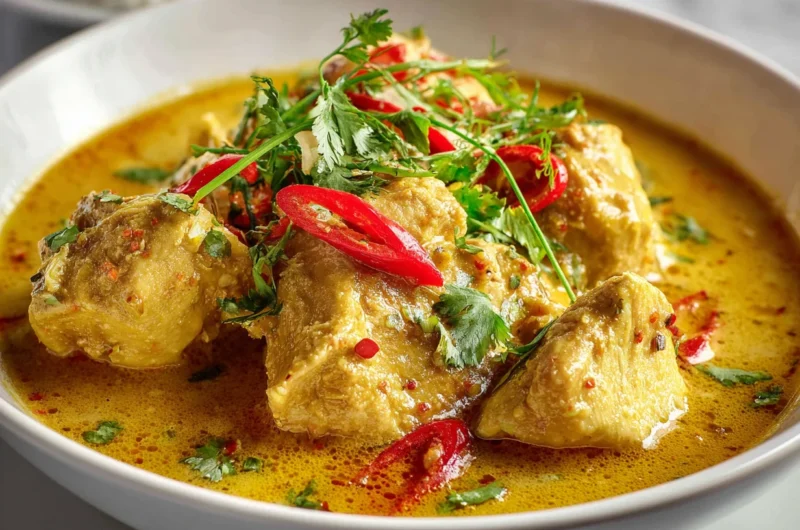
Easy Coconut Curry Chicken Recipe Full of Flavor
4
servings15
minutes25
minutes420
kcalA rich and flavorful coconut curry chicken made with tender chicken pieces, aromatic spices, and creamy coconut milk. This recipe delivers a perfect balance of heat, creaminess, and depth, making it ideal for quick dinners, family meals, and high-quality home cooking.
Ingredients
500g chicken thigh or breast (boneless, medium pieces)
2 tbsp cooking oil (neutral or olive oil)
1 medium onion (finely sliced)
3 garlic cloves (minced)
1 tbsp ginger paste
400ml full-fat coconut milk
2 tbsp curry powder
1 tsp turmeric powder
1 tsp paprika
1 tsp salt (adjust to taste)
½ tsp black pepper
½ cup chicken stock or water
Optional Add-ins:
1 tbsp fresh coriander (finely chopped)
1–2 green chilies (for heat intensity)
½ cup bell peppers (added nutrition and texture)
1 tbsp lime juice (for acidity balance)
½ tsp chili flakes (enhanced spice profile)
Directions
- Heat oil in a pan over medium heat.
- Add onions and sauté until soft and golden.
- Add garlic and ginger paste; cook until fragrant.
- Mix in curry powder, turmeric, paprika, salt, and pepper.
- Add chicken pieces and cook until lightly browned.
- Pour in coconut milk and chicken stock.
- Simmer on low heat until chicken is tender and sauce thickens.
- Adjust seasoning and serve hot with rice or bread.
Recipe Video
Notes
- Always cook spices on medium heat to avoid bitterness
- Use full-fat coconut milk for rich, creamy texture
- Simmer gently for tender, juicy chicken
- Adjust spice level according to preference
- Serve fresh for best taste and aroma