Rustic German Bread Recipe
Rustic German bread captures the essence of traditional European baking, offering a deep, complex flavor and a hearty, satisfying texture. Its artisan crust and wholesome crumb make it a timeless addition to any table, evoking the warmth and simplicity of old-world bakeries. This bread is equally delightful when served fresh with butter or paired with soups, stews, and cheeses. Each loaf embodies craftsmanship, patience, and the comforting familiarity of home-baked bread.
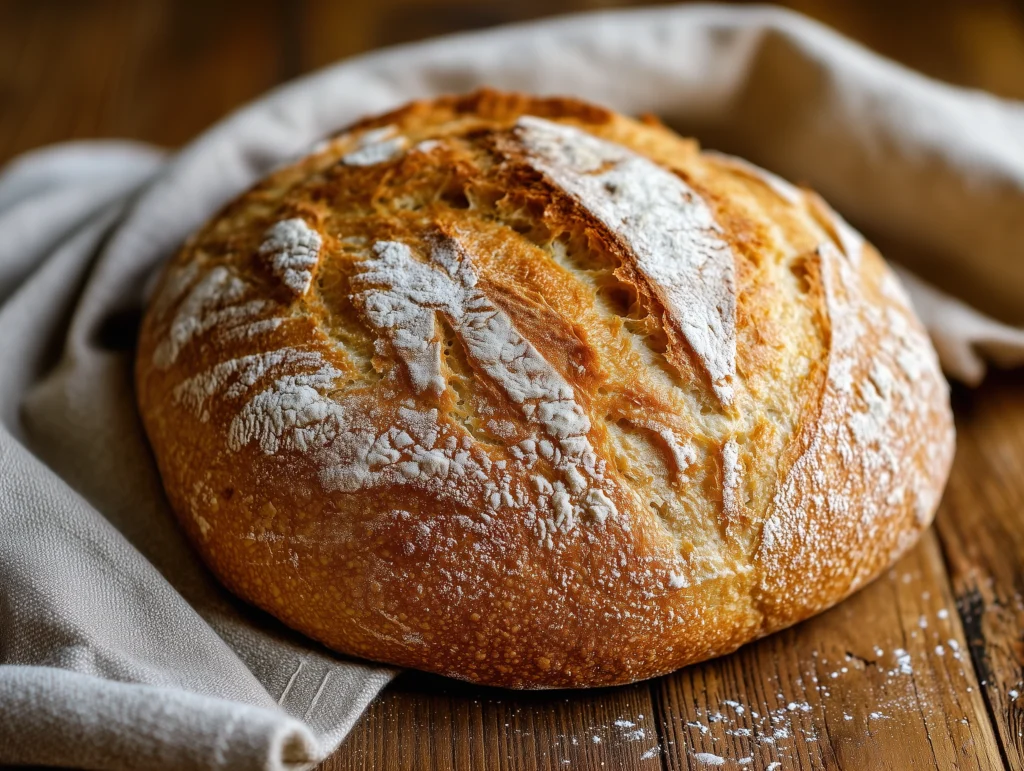
Table of Contents
Ingredients
- Bread flour
- Whole wheat flour
- Warm water
- Active dry yeast
- Salt
- Honey or sugar
- Olive oil
- Optional seeds: sunflower or caraway
How to Make Rustic German Bread?
Begin by activating the yeast, combining it with warm water and a touch of honey, and allowing it to rest until foamy. This step ensures a robust rise and contributes to the bread’s depth of flavor. In a separate bowl, mix the bread flour, whole wheat flour, and salt, then incorporate the activated yeast mixture and olive oil, forming a shaggy dough.
Knead the dough on a lightly floured surface until it becomes smooth and elastic, building gluten and structure for the loaf. Place the dough in an oiled bowl and allow it to rise until doubled, which enhances the flavor through slow fermentation. Gently shape the dough into a round or oval loaf, dust the surface with flour, and allow a second rise. Bake until the crust is golden and the loaf sounds hollow when tapped, achieving a perfect rustic finish.
Cooking Time
The total preparation and baking process takes approximately one hour, with rising times depending on the ambient temperature and humidity. This timing ensures a well-fermented dough with a flavorful crumb and firm, artisanal crust. Patience during the rising stages allows the natural flavors of the flour and yeast to fully develop. The result is a loaf with a deep, rich aroma that enhances every meal it accompanies.
Nutritional Information
Each slice of this rustic German bread contains approximately 140 calories, 26 grams of carbohydrates, 5 grams of protein, and 2 grams of fat. It provides a wholesome, satisfying option for meals or snacks while maintaining a balanced nutritional profile.
Storage and Reheating
Store the bread at room temperature in a bread bag or airtight container for up to three days. For longer preservation, wrap tightly and freeze for up to two months, restoring freshness and texture by lightly toasting after thawing. Proper storage maintains the bread’s rustic crust and tender interior.
Suggestions and Variations
This bread pairs beautifully with creamy butter, soups, hearty German dishes, and cheese boards. Enhance the flavor by adding sunflower or caraway seeds, or incorporate a small portion of rye flour to deepen its rustic character. Its versatility makes it suitable for both casual meals and festive occasions.
Seasonal Relevance
Rustic German bread is ideal year-round but particularly comforting during autumn and winter. Its warm, aromatic loaf complements cold-weather stews, holiday feasts, and cozy gatherings, bringing a touch of traditional European charm to seasonal tables.
Rustic German Bread Recipe
8
servings15
minutes35
minutes180
kcal50
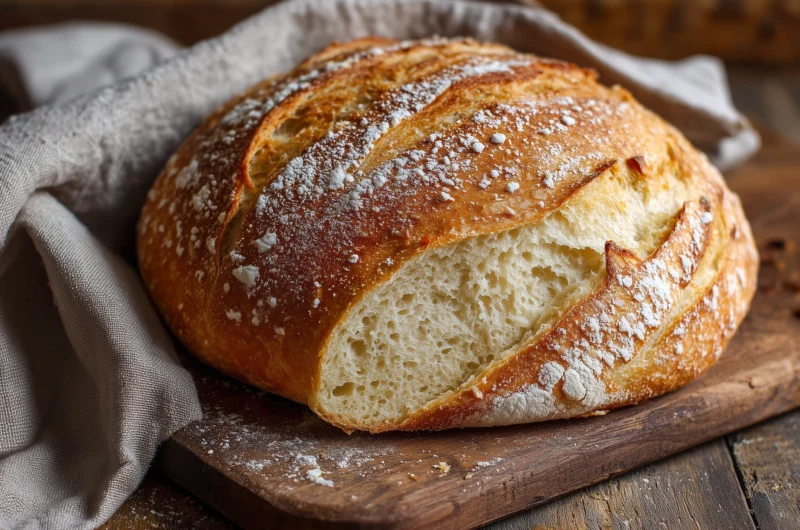
minutesThis Rustic German Bread Recipe delivers a hearty, crusty loaf with a tender, flavourful interior. Perfect for sandwiches, toasting, or enjoying with soups and stews, this bread brings the authentic taste of traditional German baking into your kitchen.
Ingredients
Bread flour
Whole wheat flour
Warm water
Active dry yeast
Salt
Honey or sugar
Olive oil
Optional seeds: sunflower or caraway
Directions
- Activate yeast: In a small bowl, dissolve sugar in warm water and sprinkle yeast on top. Let sit for 5 to 10 minutes until frothy.
- Mix dough: In a large bowl, combine flours and salt. Add yeast mixture and olive oil. Mix until a sticky dough forms.
- Knead: Turn dough onto a floured surface and knead for 8–10 minutes until smooth and elastic.
- First rise: Place dough in a greased bowl, cover, and let rise in a warm place for 1–1.5 hours, until doubled in size.
- Shape loaf: Punch down dough and shape into a round or oval loaf. Place on a parchment lined baking sheet.
- Second rise: Cover and let rise 30 minutes. Preheat oven to 400°F (200°C).
- Bake: Score the top of the loaf with a sharp knife. Bake for 30–35 minutes until golden and hollow-sounding when tapped.
- Cool: Let bread cool completely on a wire rack before slicing.
Recipe Video
Notes
- For extra flavour, add 1–2 teaspoons caraway seeds to the dough.
- Spritz the loaf with water before baking to achieve a crisper crust.
- Store in a bread bag or wrapped in a cloth at room temperature for up to 3 days.
FAQs
Can I make this recipe without whole wheat flour
Yes you can replace it with bread flour though whole wheat adds depth and richness.
Can I bake this bread in a Dutch oven
Yes a Dutch oven gives the loaf an incredible crust by trapping steam.
Can I add rye flour
Yes replacing a small portion of the flour with rye creates a more robust German style flavor.